Business Card Etiquette Around the World Explained

Sharing business cards has long been one of the easiest and most convenient ways to exchange contact information across cultures.
As far back as the 15th century, China used “calling cards” to announce visits. In 17th-century Europe, merchants handed out trade cards that doubled as advertisements.
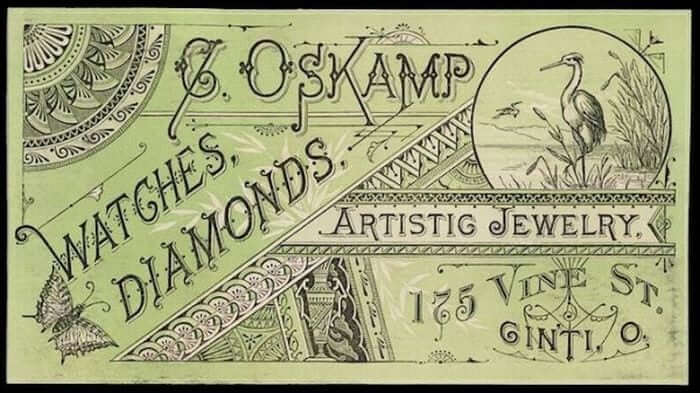
Today, business cards remain much more than contact slips. They act as reminders of meetings, symbols of respect, and even extensions of a person’s professional identity.
Even in a digital world, cross-cultural business etiquette still includes exchanging cards. But doing it the wrong way can leave a poor impression. Here’s how etiquette differs around the globe.
The Basics Are the Same
At their core, business cards everywhere share a purpose: to introduce and provide contact information.
They typically include:
- Name
- Position or title
- Contact details
- Company website
Most are rectangular and simple in design, though creative versions are increasingly common.
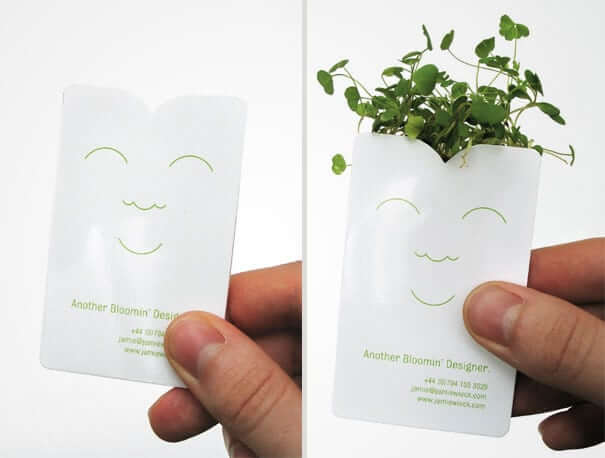
In many cultures, cards represent the individual, so the way they are presented matters. While in the US, UK, and Australia the exchange is often casual, in Japan, China, and parts of the Middle East it carries ceremonial importance.
Business Card Etiquette in Japan
In Japan, exchanging business cards (meishi) is a formal act of respect.
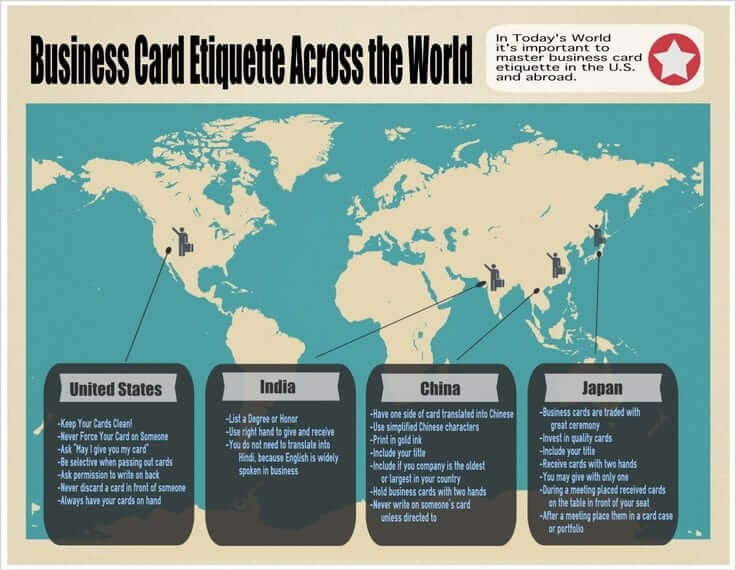
- Receive cards with both hands, bow, and thank the giver.
- Take time to examine the card—repeat the name or company to show attention.
- Never shove it into your pocket; place it carefully in a holder.
- Present your own card with both hands.
Business cards are treated as an extension of the person, so use high-quality materials and professional design.
Business Card Etiquette in the Middle East
Exchanging cards here is less ceremonial than in Japan. The main rule: always present your card with your right hand—never the left.
Business Card Etiquette in India
In India, cards are common in both business and social settings.
- Offer cards with the right hand.
- Highlight academic qualifications prominently—degrees and certifications carry weight.
Business Card Etiquette in China
Like Japan, China treats business cards with great respect. Cards are considered almost sacred.
- Offer and receive with both hands.
- Take time to study the card before putting it away.
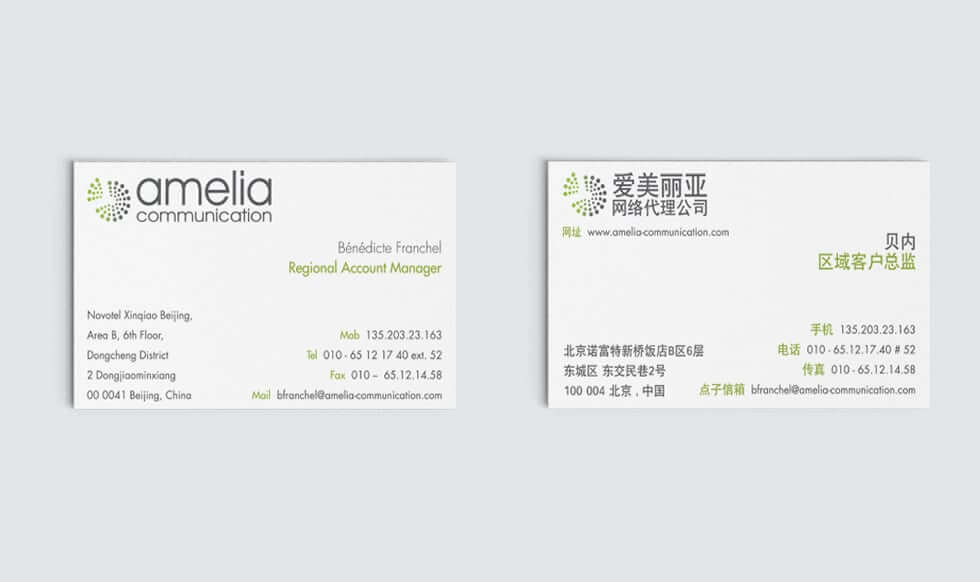
- Consider printing information in Chinese on the reverse side.
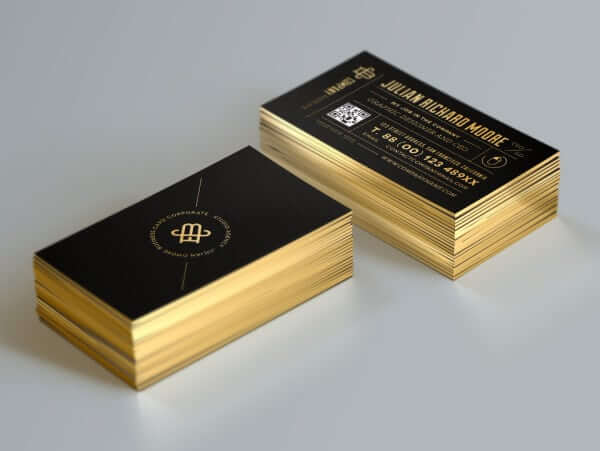
- Red and gold accents are considered lucky.
Business Card Etiquette in Western Europe
In Western Europe, etiquette is relaxed but professionalism still matters.
- Don’t distribute cards like playing cards.
- Avoid leaving piles on tables.
- Present them thoughtfully, one-to-one.
Give Your Business Card the Best Chance Globally

No matter the culture, a few universal practices apply:
- Keep card information concise and clear.
- Glance at cards you receive to show respect.
- Follow local customs (right hand in India and Middle East; both hands in Asia).
How You Exchange Business Cards Can Leave a Lasting Impression
There are vast differences in cultures around the world and this is carried over into the business world, particularly when it comes to exchanging information in the form of business cards.
Knowing the etiquette of the different countries you’re doing business in means you can make a good first impression and avoid any awkward encounters. But even more importantly, you can show your respect for people in those countries by following their rituals around exchanging contact information.

The most important thing to remember is that, wherever you are in the world, keeping your business cards neat and tidy in a holder is the preferred way of doing business. On top of that, think about your card as an extension of yourself and the lasting impression you’d like it to give people you’re doing business with.
When you bear this in mind, you can create and present a design that not only acts as a vessel for information, but also as an extension of your company and brand.
For everything else, like how to hand over your card or what you should do once you receive one, should be researched before you travel abroad depending on where you’re going and the kind of businesses you’ll be meeting with.
Get the exchanging of business cards right, and you might just see business soar.
For more tips and tricks on how to design a business card that wows around the world, sign up to our newsletter.
Set Up Your Free Business Card Portal
Get Started