Business Card Ideas: 11 Creative Styles With Examples
Creative business card ideas you can actually print: spot gloss, foil, painted edges, thick color core, kraft paper, magnets, stickers and more, with examples.

 By Brandly Team
Inspiration
On this page
The business card ideas that get noticed are the ones people can feel: spot gloss, gold or silver foil, painted edges, extra-thick or color core stock, kraft paper and rounded corners. For cards people keep, try a writable back, plastic, magnets or stickers. Every idea below can be ordered from Brandly at standard business card size.
Most business cards get a glance and a drawer. The ones people remember usually feel different in the hand: a velvety finish, a flash of gold, a thick edge in your brand color.
This guide covers 11 creative business card ideas, with an example of each. They all work at standard business card size, so you can order them for one person or roll them out to a whole team on the same design.
1. Spot gloss on a soft-touch card
Spot gloss is a clear, shiny coating printed only on parts of the card, such as your logo or a pattern. On a velvety soft-touch card, the logo catches the light while the rest of the card stays matte. It’s subtle until someone tilts the card, which is why it works so well for firms that want to look premium without looking loud.
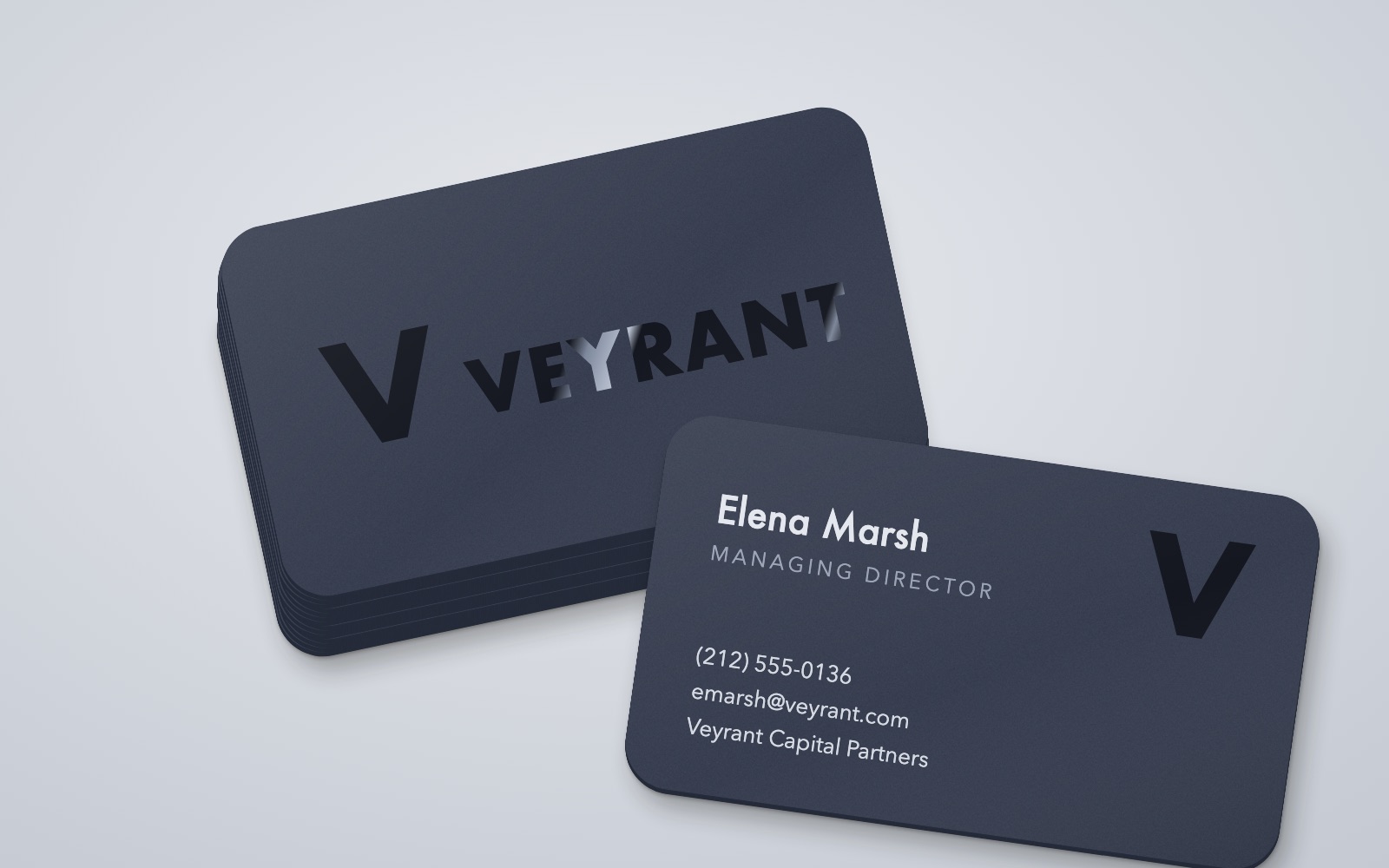
- Where to use it: your logo, a large monogram or a repeating pattern. Big, bold shapes show the effect best.
- Best on dark colors, where the contrast between matte and gloss is strongest.
- Works well for: financial services, law, consulting, real estate and luxury brands.
Brandly papers: Soft-Touch + Spot Gloss (18 pt), Premium Matte + Spot Gloss (16 pt) and Double Thick Soft-Touch + Spot Gloss (34 pt).
2. Gold or silver foil
Foil adds a real metallic layer to your card, not a gold-colored ink. It shines in a way printing can’t, and it instantly makes a card feel more formal. Gold on a dark green or navy card is a classic for professional firms. Silver feels cooler and more modern.
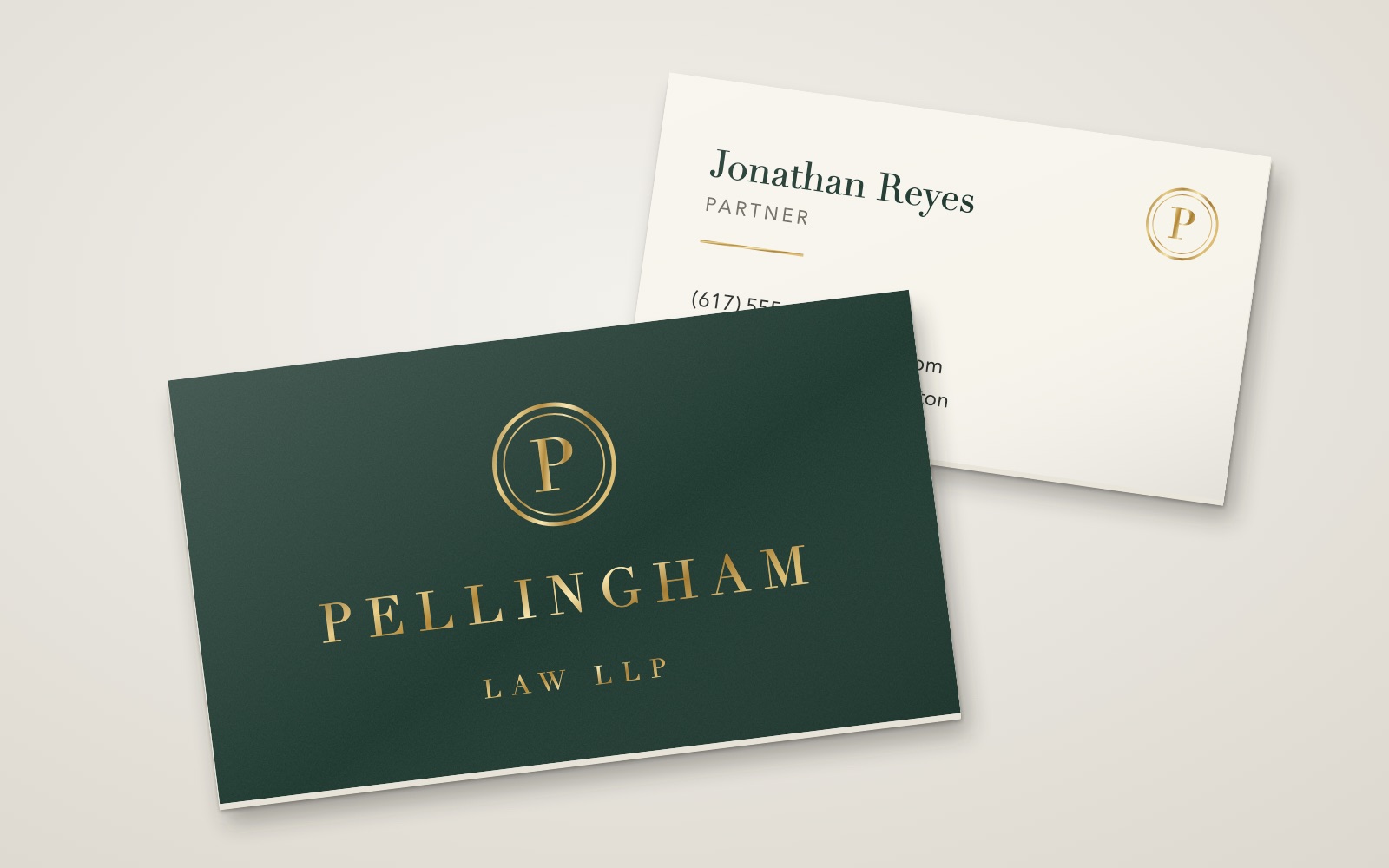
- Keep it to an accent. Use foil for the logo, a name or a thin line, and keep it to under about 30% of the side.
- Avoid fine text and hairlines in foil. They can fill in or break up.
- Choose one foil color per order: gold or silver.
Foil needs a separate file, called a foil mask, that shows where the foil goes. If you don’t have one, our team can help you make it.
Brandly papers: Premium Matte + Foil, Soft-Touch + Foil and Double Thick Soft-Touch + Foil.
3. Painted edges
Painted edges turn the side of the card into a stripe of color. From the front, the card looks clean and simple. Pick it up, or see a stack on a desk, and the edge color shows. It’s a smart way to bring in a brand color without filling the whole card with it.
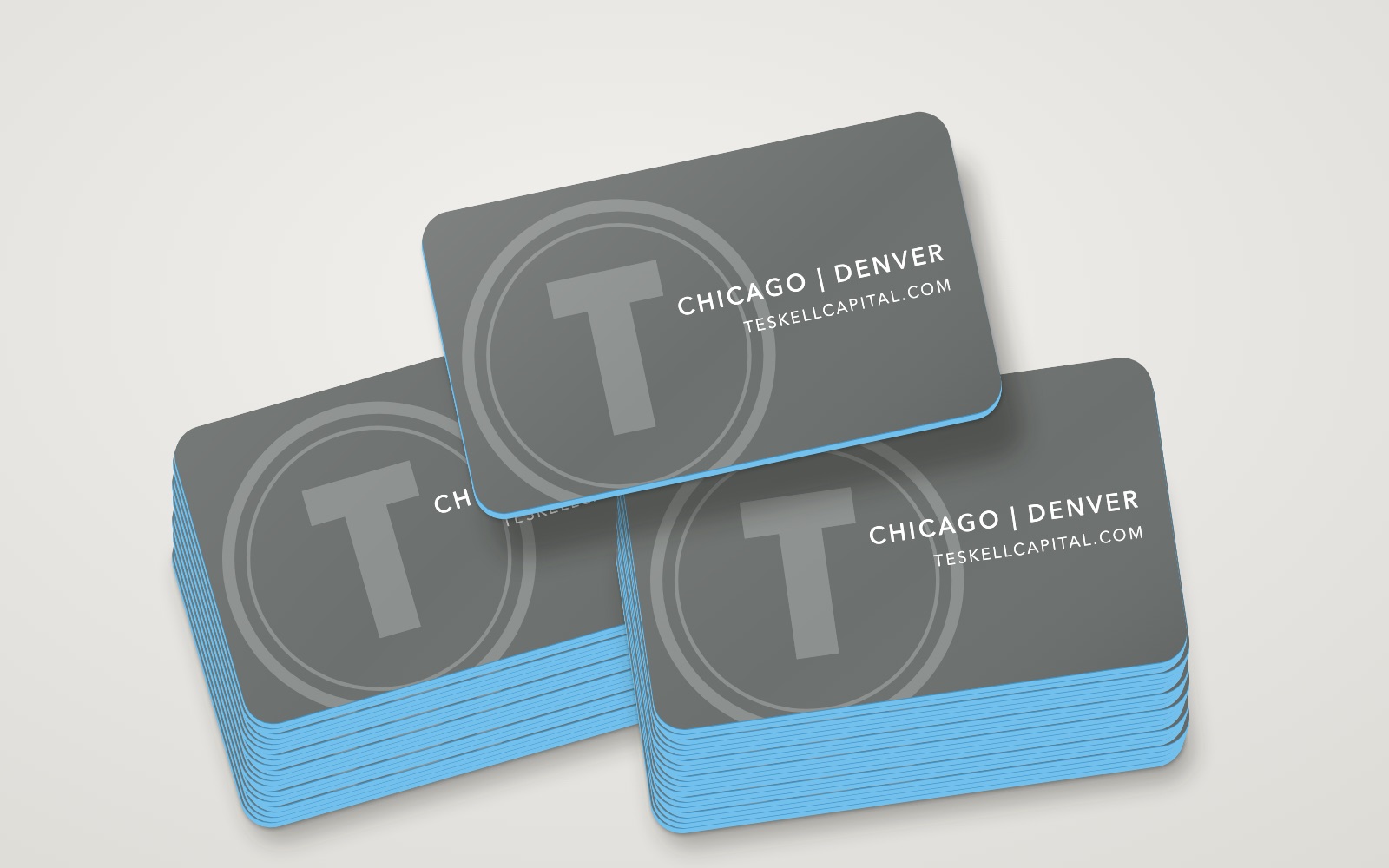
- Match your brand color, or use a contrasting color that makes the edge pop.
- Choose from more than a dozen colors, including black, blue, red, turquoise, yellow and metallic shades like gold, blue and pink.
- Painted edges show best on thick cards, where there’s more edge to see.
For a company with several divisions, a different edge color for each one keeps the same front design while making each team’s cards easy to tell apart.
4. Extra-thick cards and color core
A thick card says “we take this seriously” before anyone reads it. Double Thick cards are about twice the thickness of a standard card. A color core card goes further, with a layer of black sandwiched between two layers of white, so a black stripe shows along every edge.
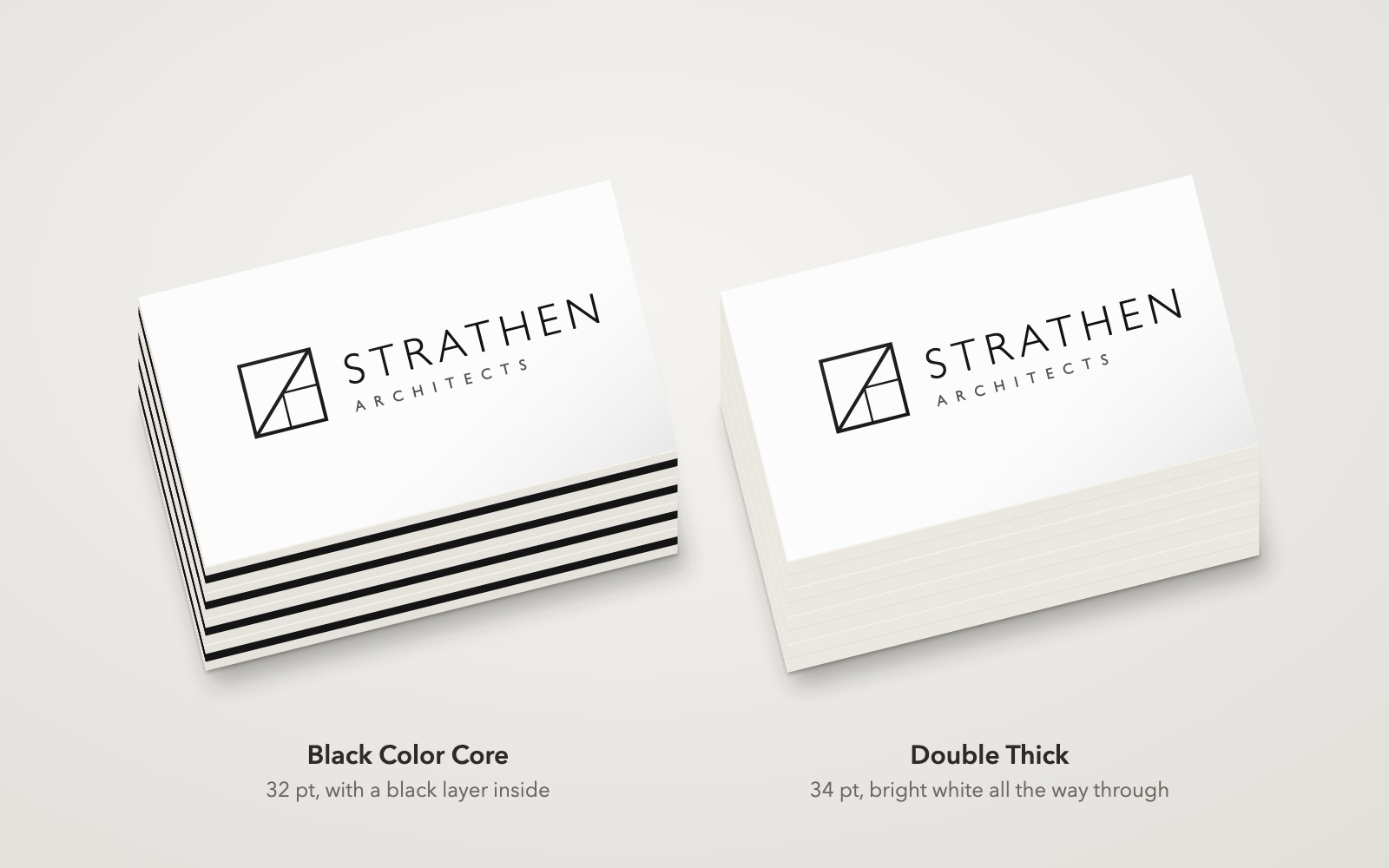
- Keep the design simple. The thickness does the work, so a clean logo and plenty of white space look best.
- Works well for: architects, designers, agencies, executives and anyone who hands out cards at high-stakes meetings.
Brandly papers: Black Color Core (32 pt), Double Thick (34 pt) and Double Thick Soft-Touch (34 pt).
5. Kraft paper
Kraft paper is brown, slightly flecked and made from recycled fibers. A simple line logo in black ink looks clean and natural against it. It tells people you care about sustainability before you say a word.
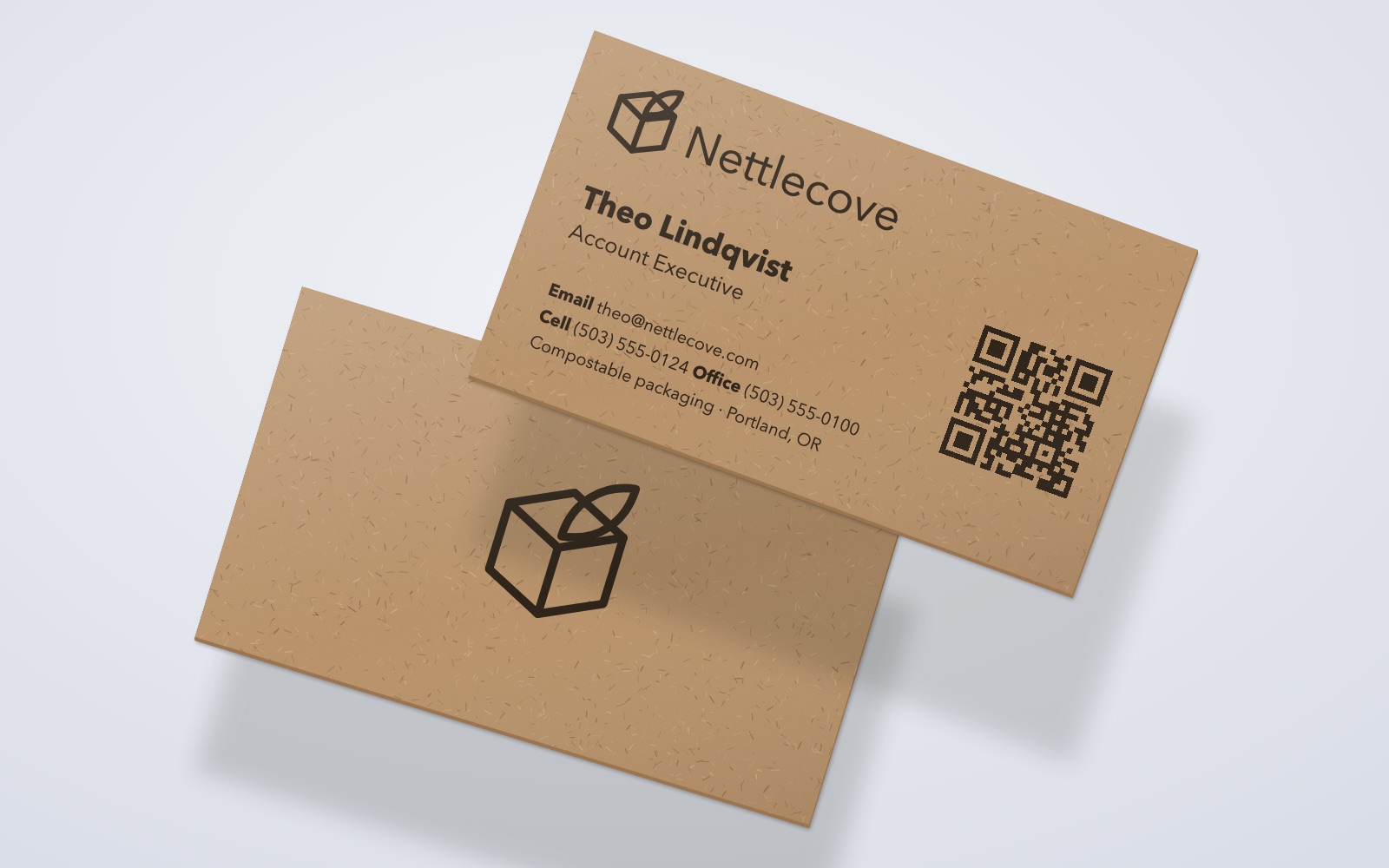
- Print in black or a dark color for crisp text. For contrast on a logo or graphic, kraft can also be printed with white ink.
- Keep graphics simple. Line logos and solid shapes work better than photos on kraft.
- Works well for: landscaping, construction, outdoor brands, food and beverage, and any company with sustainability goals.
Brandly papers: Kraft Paper (18 pt, 100% recycled). For a lighter natural look, try Natural Uncoated (14 pt, recycled).
6. Rounded corners
Rounded corners make a card feel friendlier and more modern, and they don’t get dog-eared in a wallet. It’s a small change that makes your card look different from everyone else’s in a stack.
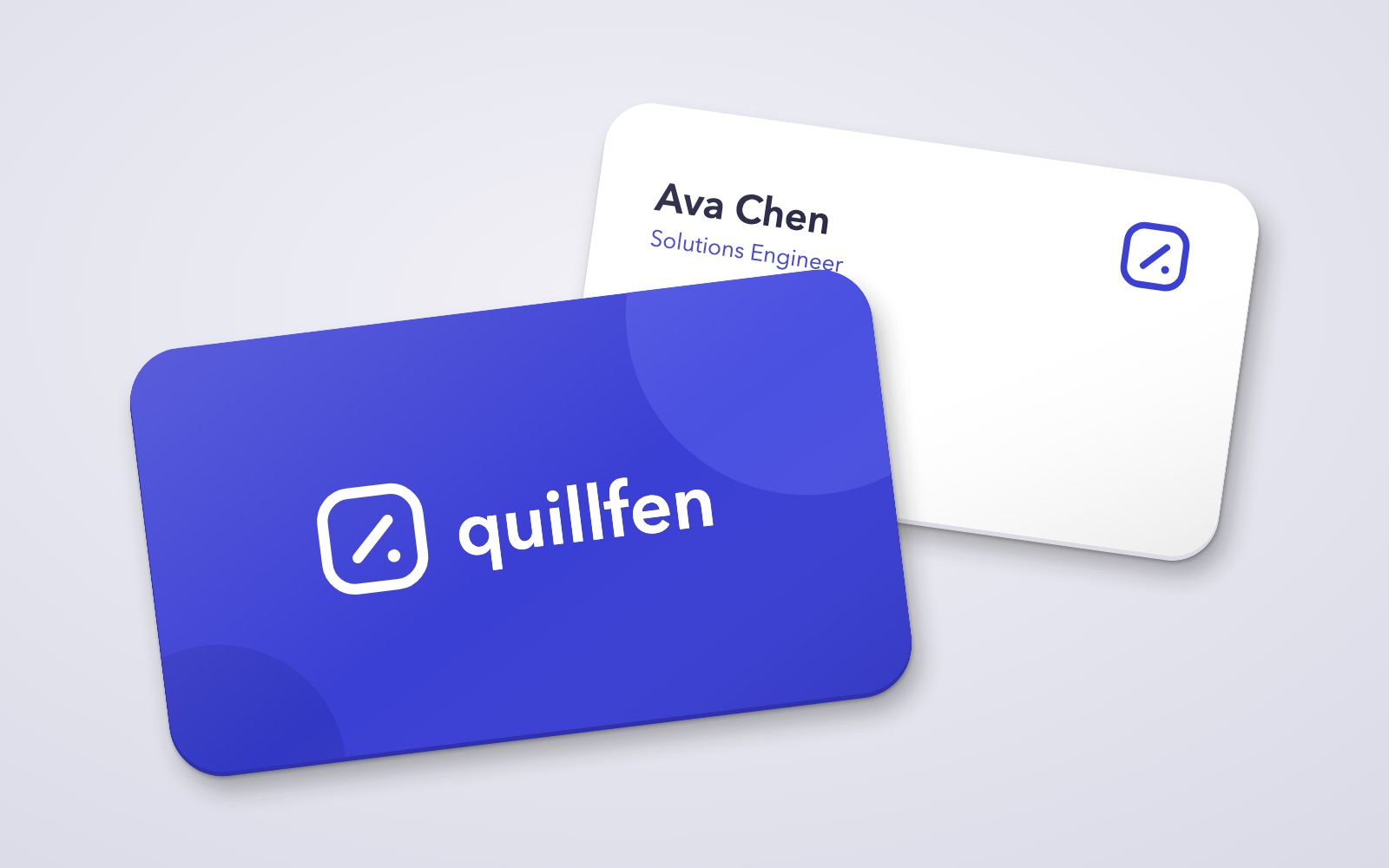
- Pairs well with rounded shapes in your logo, like an app icon.
- Keep text away from the corners. Stay inside the safe area, about 1/8 inch from the edge. See our guide to business card size, bleed and safe area.
- Works well for: tech companies, startups, healthcare and creative agencies.
Brandly rounds corners to a 1/4 inch radius, on most papers, including standard, premium and soft-touch.
7. A writable back
A writable card has a shiny, colorful front and a back you can write on with a pen. Print a few labeled lines on the back, and the card becomes an appointment reminder, a service record or a quote. People keep it because it has their information on it.
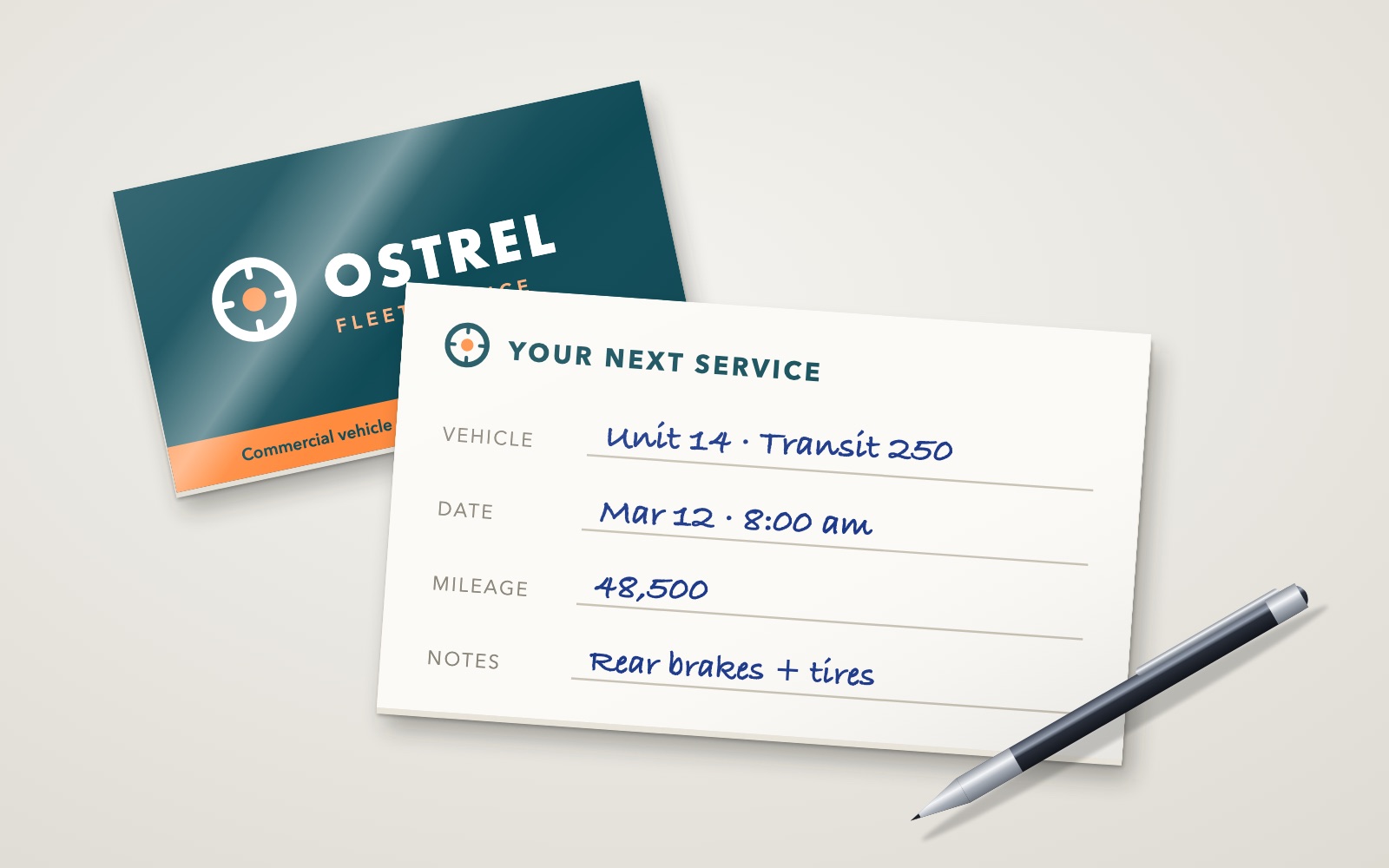
- Print labels, not just lines: “Next service,” “Your appointment,” “Quote #” or “Your account manager.”
- Leave room to write. Lines about 1/4 inch apart are comfortable for most handwriting.
- Works well for: fleet and auto service, healthcare, salons, field sales and anyone who books follow-ups.
Brandly papers: Deluxe Writable (18 pt). Uncoated papers take pen well too.
8. Plastic cards
Plastic business cards are made of PVC, so they resist tearing and don’t fall apart when they get wet. They have a smooth, glossy face that keeps colors bright. They’re a good fit for people who work outdoors or hand cards to customers who will keep them in a truck or toolbox.
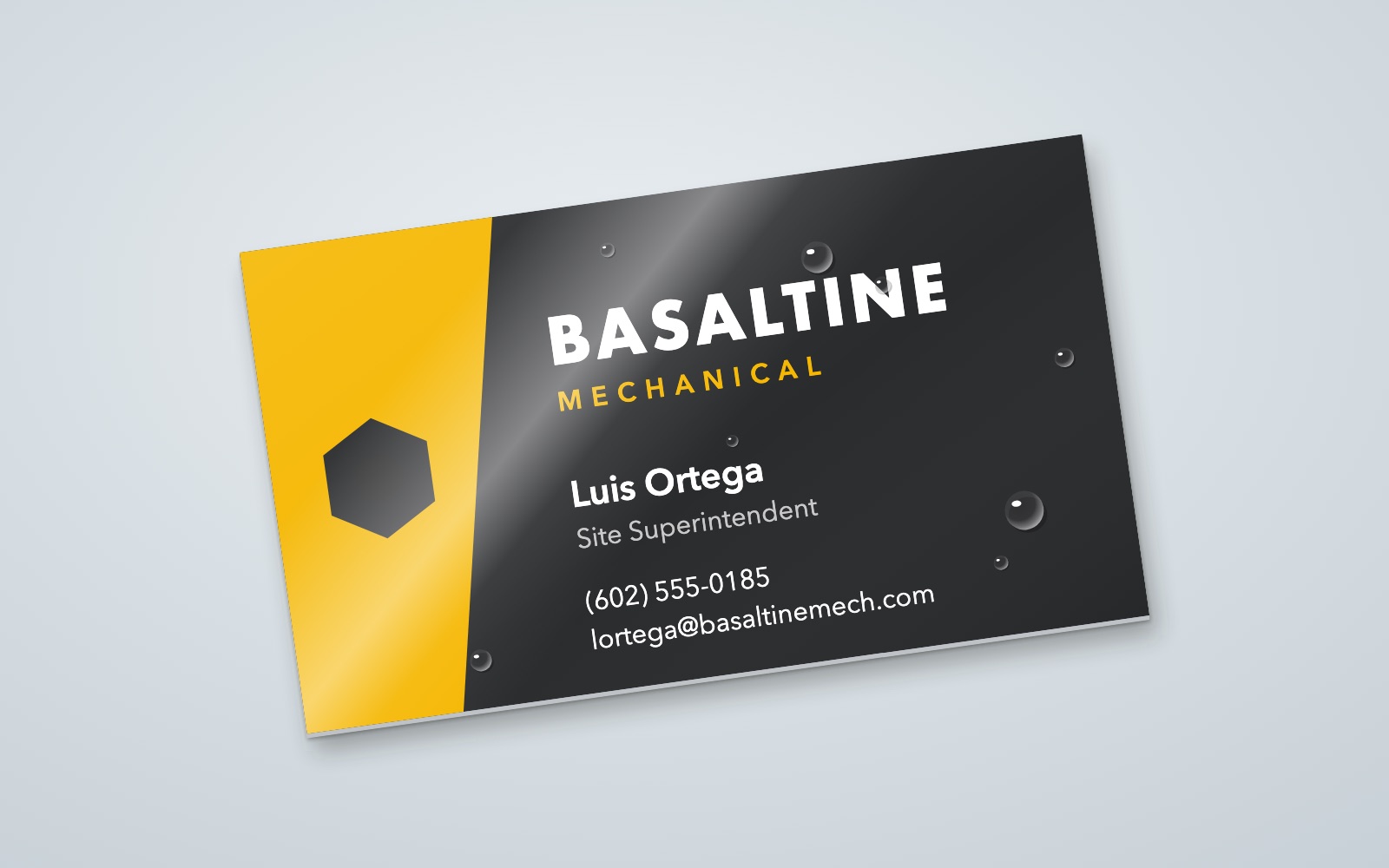
- Use bold colors and high contrast. They look best on plastic.
- Works well for: construction, field service, trades, gyms, marinas and outdoor companies.
Brandly papers: Plastic (15 mil PVC).
9. Business card magnets
A business card magnet goes on the fridge, a filing cabinet or a toolbox, and it stays there. For any company customers call again and again, it puts your phone number in front of them at the moment they need it.
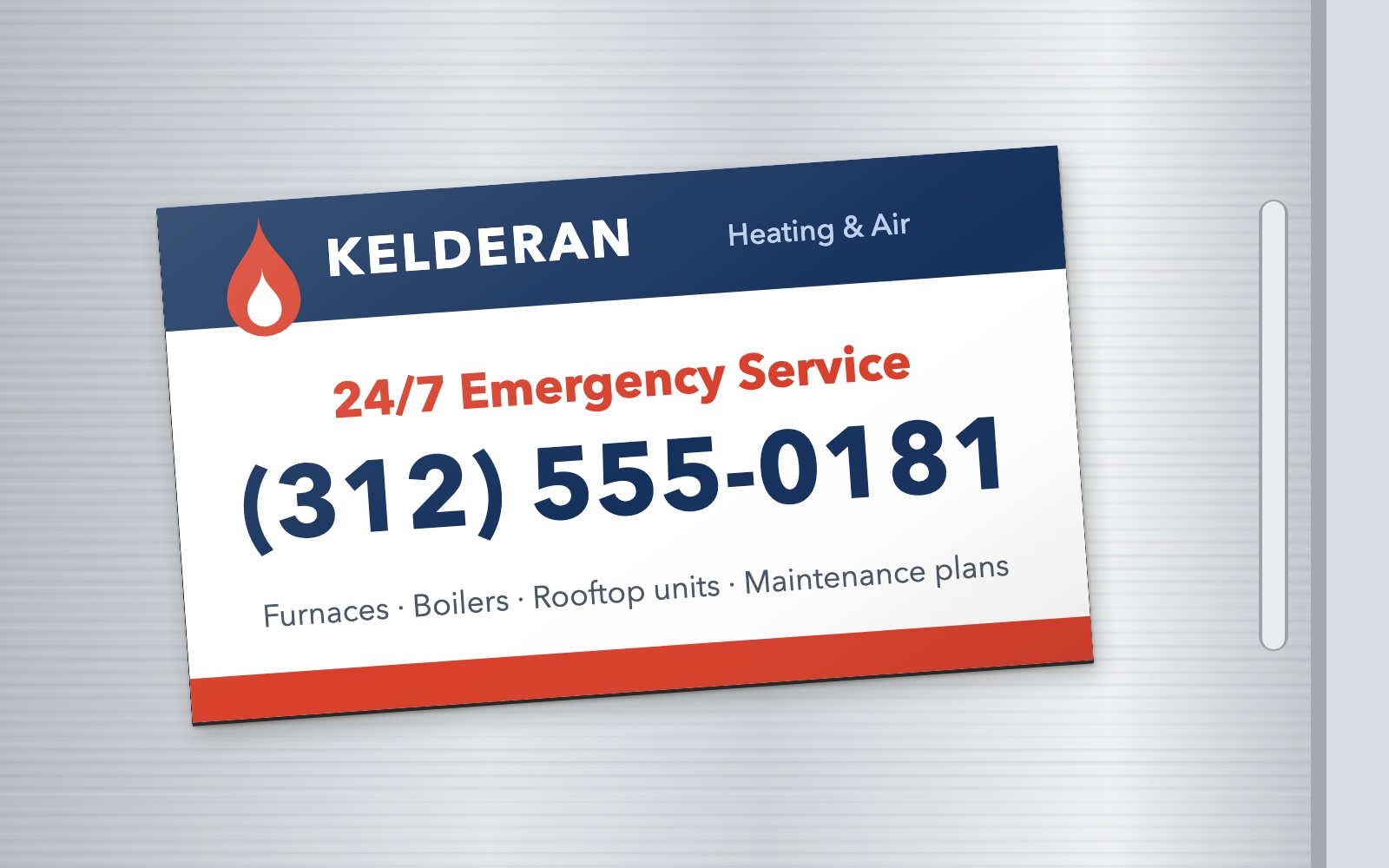
- Make the phone number the biggest thing on the card. The magnet’s job is to be found in an emergency.
- Say what you do in a few words, such as “24/7 emergency service” or “Pest control · Termites · Rodents.”
- Works well for: HVAC, plumbing, pest control, electricians, property management and home services.
Many service teams hand out a regular card to the customer and leave a magnet on the fridge.
10. Business card stickers
A sticker printed at business card size goes on equipment, packaging, invoices and folders. For service companies, a sticker on the unit you just serviced is a reminder that’s right where the next problem will happen.
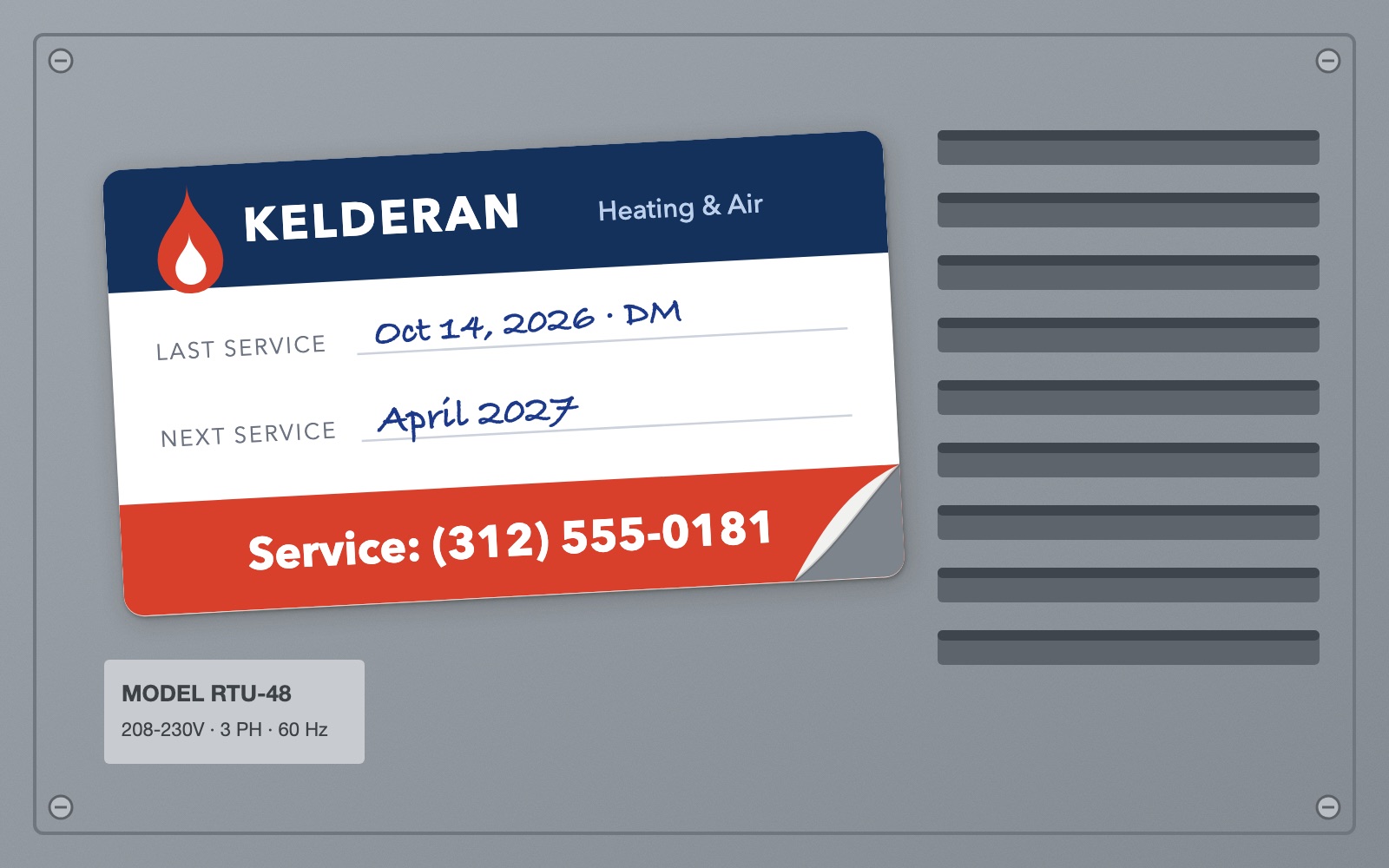
- Leave space to write in dates or initials, so each sticker works as a service record.
- Put the phone number in large type, so the next person who looks at the equipment knows who to call.
- Works well for: HVAC, fire safety, IT equipment, fleet service and packaging.
Brandly papers: Stickers (13 pt, single-sided, strong adhesive, outdoor-ready).
11. A QR code
A QR code connects your card to everything that doesn’t fit on it: your contact details, a booking page, open job listings or a product demo. Someone scans it with their phone camera, and they’re there.
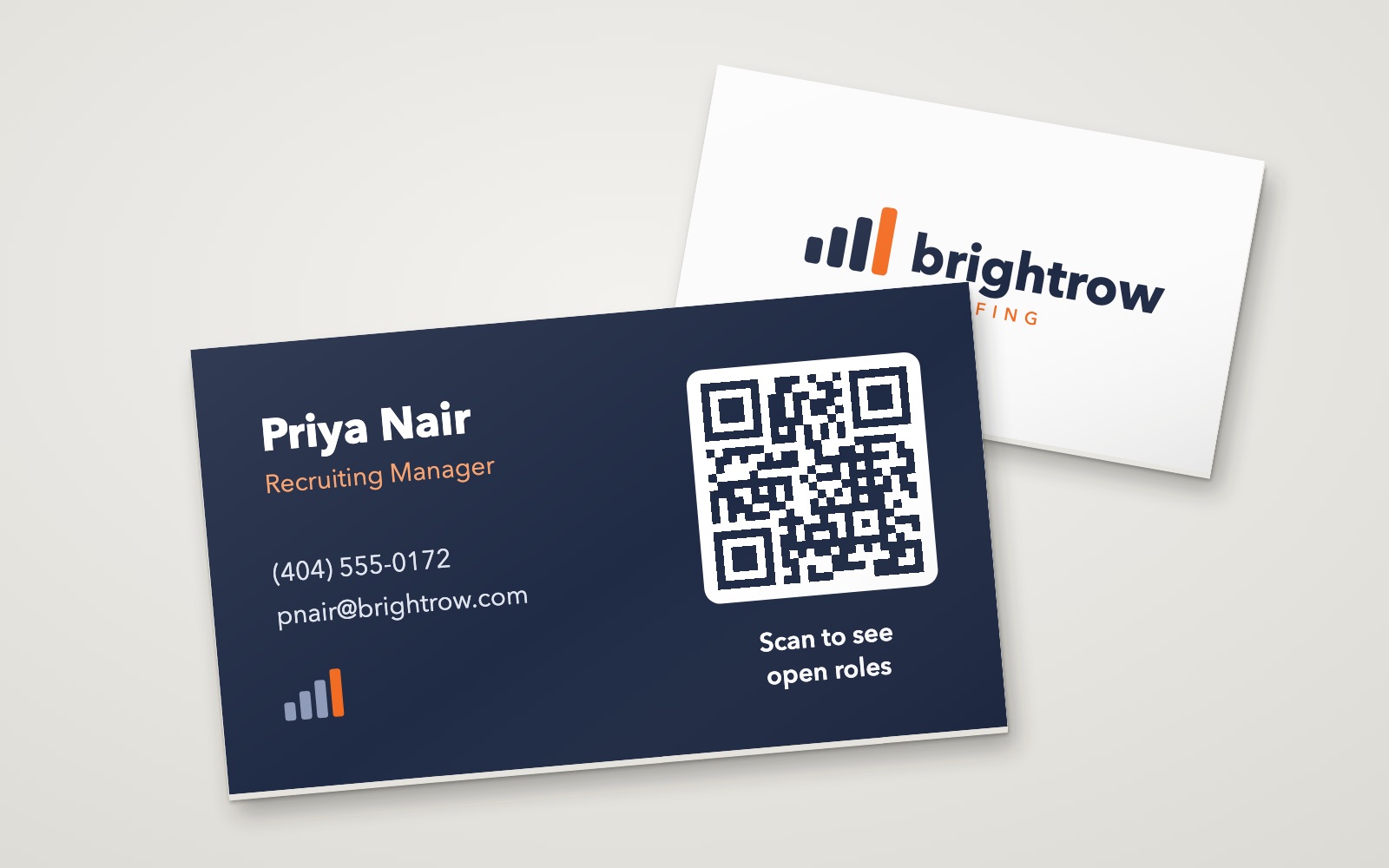
- Tell people what the QR code does, like “Scan to save my contact” or “Scan to book a call.”
- Make it at least 3/4 inch (about 2 cm) wide, with a plain margin around it.
- Point it at a page that works on a phone.
For more, see everything you need to know about QR codes on business cards and how QR code business cards save your contact in one scan.
Design ideas that cost nothing extra
Not every idea needs a special paper. These work on any card:
- Keep it minimal. Clear type, plenty of white space and only the details people need. A clean card looks confident and is easy to read.
- Use a bold typeface for your name or company name. A strong font can tie the whole company together, even when each team uses different colors.
- Fill the back with your brand color. Full color on both sides costs no more than one side at Brandly.
- Turn it vertical. A vertical layout stands out in a stack of horizontal cards. See 12 vertical business card designs.
- Add social icons for the accounts your company keeps up. See why to add social media icons to your business cards and how to put Instagram on business cards.
Which idea fits your business?
| Idea | Brandly paper | Works well for |
|---|---|---|
| Spot gloss | Soft-Touch or Matte + Spot Gloss | Finance, law, consulting |
| Foil | Soft-Touch or Matte + Foil | Law, real estate, luxury brands |
| Painted edges | Painted edge cards | Agencies, staffing, any company with a bold brand color |
| Thick and color core | Double Thick, Black Color Core | Architects, designers, executives |
| Kraft paper | Kraft Paper | Packaging, landscaping, sustainable brands |
| Rounded corners | Most papers | Tech, startups, healthcare |
| Writable back | Deluxe Writable | Service appointments, healthcare, field sales |
| Plastic | Plastic | Construction, trades, outdoor work |
| Magnets | Business card magnets | HVAC, plumbing, pest control |
| Stickers | Stickers | Equipment service, packaging |
| QR code | Any paper | Recruiting, sales, events |
To compare thickness, finish and price, see our guide to business card paper types.
Using a creative idea across a whole team
A creative card is easy for one person. For 50 or 500 people, the challenge is keeping every card on the same design and the same paper, so everyone’s card looks like it came from one company.
With a business card portal, you set the design and paper once. Each employee adds their own name, title and contact details, and every reorder uses the same finish. You can also vary one detail by team, like a different edge color or icon for each department, while the logo and layout stay the same.
Business card ideas FAQs
What are some creative business card ideas?
Popular ideas include spot gloss on a soft-touch card, gold or silver foil, painted edges, extra-thick or color core stock, kraft paper, rounded corners, a writable back, plastic cards, business card magnets and stickers. A QR code that saves your contact details is a simple idea that costs nothing extra.
What is the thickest business card?
At Brandly, Double Thick and Double Thick Soft-Touch cards are 34 pt, and Black Color Core is 32 pt. Most everyday business cards are 14 to 18 pt.
Can I get die-cut or custom-shaped business cards?
Not from Brandly. We print standard US (3.5 x 2 in) and international (85 x 55 mm) sizes, horizontal or vertical, with square or rounded corners. For a card that stands out without a custom shape, try painted edges, a color core or spot gloss.
Can I write on my business cards?
Yes, on uncoated papers and on Deluxe Writable cards, which have a shiny front and a back that takes pen and pencil. Gloss-coated cards smudge, so avoid them if you plan to write appointment times or notes on the card.
Are kraft business cards recycled?
Brandly’s kraft paper cards are made from 100% recycled fibers, with a natural brown color and small flecks. They’re 18 pt thick and can be printed in black or white ink.
Do special finishes cost more?
Yes. Foil, spot gloss, soft-touch and extra-thick stocks cost more per card than standard paper. Design ideas like a bold brand color, a QR code or a vertical layout cost nothing extra. See our guide to business card paper types for how papers compare on price.
The takeaway
The best business card ideas change how a card looks or feels without changing its size: spot gloss, foil, painted edges, thick color core, kraft paper, rounded corners and a writable back. For cards that stay where customers need them, use magnets, stickers or plastic. Pick one idea that fits your brand, and keep the rest of the design simple.
Before you print, run through the 10 essential rules for designing a business card.
Set Up Your Free Business Card Portal
Get Started