Vertical Business Cards: 12 Designs and When to Use One
12 vertical business card designs you can print, the vertical card size (2 x 3.5 in), and when a portrait layout works better than a horizontal one.
 By Brandly Team
Inspiration
On this page
A vertical business card is a standard card turned on its side: 2 x 3.5 inches in the US, or 55 x 85 mm in the UK and Europe. It costs the same and uses the same paper as a horizontal card. Choose vertical when your logo is tall or stacked, your name and title are short, or you want your card to stand out in a pile of horizontal ones.
Most business cards are horizontal. Turning yours on its side is one of the simplest ways to make it different, and it costs nothing extra. A vertical layout gives you a tall canvas that suits stacked logos, big type and a clear top-to-bottom reading order.
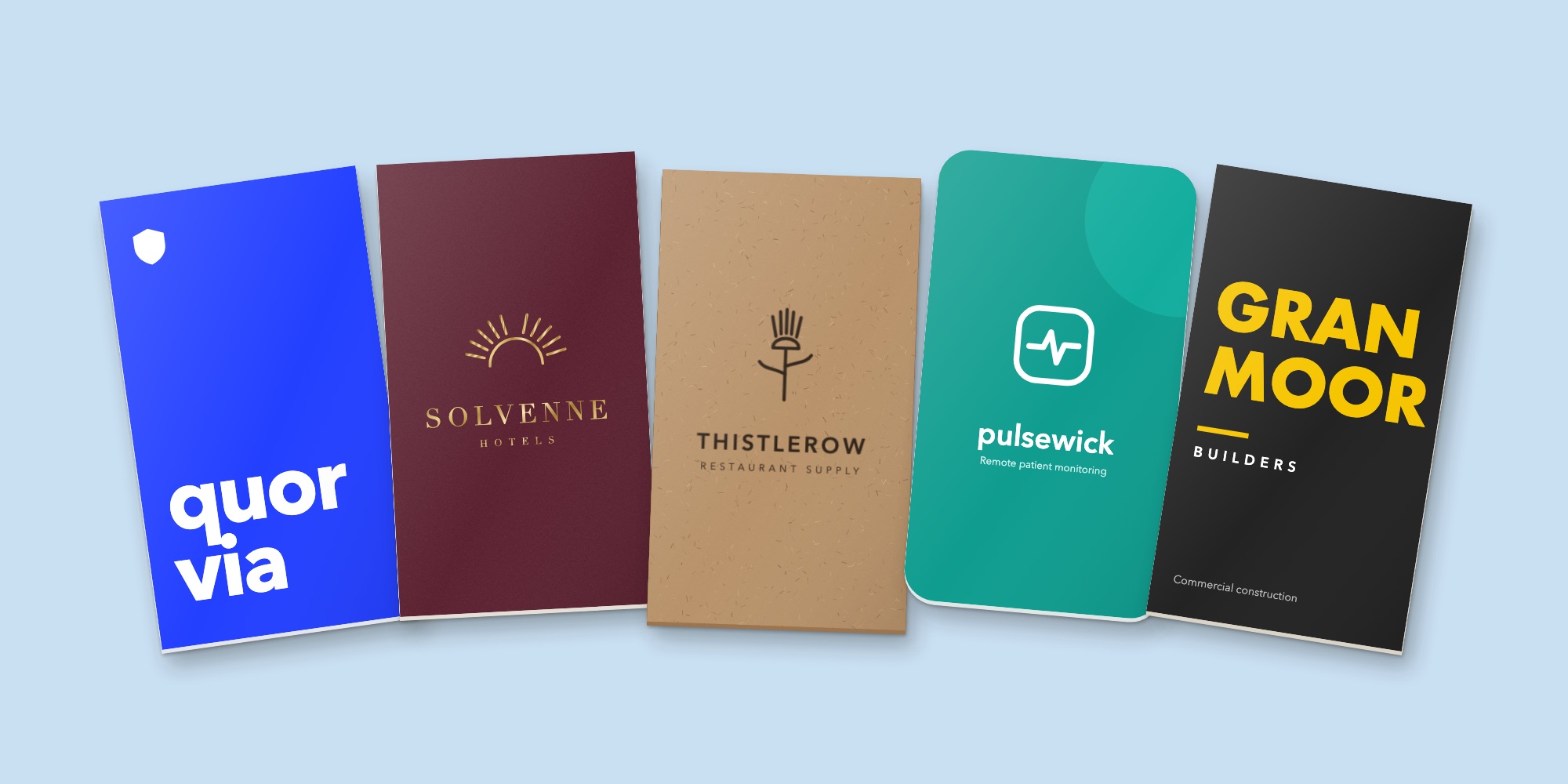
This guide covers when a vertical card works, the size to set up your file, and 12 vertical business card designs. Each one can be printed at Brandly, and each names the paper it uses.
Want a head start? Download Brandly’s free business card starter pack, with templates you can personalize.
Horizontal vs vertical business cards
| Horizontal (landscape) | Vertical (portrait) | |
|---|---|---|
| Feels | Classic and expected | Modern and distinctive |
| Best for | Long names, long titles, several phone numbers | Short names, stacked or tall logos, bold type |
| Reading order | Left to right, often in two columns | Top to bottom, one column |
| In a stack of cards | Blends in | Stands out |
| Price and paper | Same | Same |
Neither is more professional than the other. Pick the orientation that fits your logo and how much information you need on the card.
When to use a vertical business card
A vertical layout works well when:
- Your logo is tall, square or stacked. A logo that looks cramped on a horizontal card often fits naturally on a vertical one.
- Names and titles are short. One column of text is easy to read when lines stay short.
- You want a big design moment, like a full-color front, large type or a pattern.
- The back has a QR code. A tall card leaves room for a large code with text above and below it.
Stay horizontal when people have long names or titles, or when the card needs several phone numbers, two addresses or a long list of services. Those lines wrap awkwardly on a narrow card.
Vertical business card size
| US | UK and Europe | |
|---|---|---|
| Trim size | 2 x 3.5 in (51 x 89 mm) | 55 x 85 mm |
| With bleed | 2.25 x 3.75 in | 61 x 91 mm |
| Pixels at 300 DPI | 600 x 1050 px | 650 x 1004 px |
Keep text and logos at least 1/8 inch (3 mm) inside the edge. For the full details, see our guide to standard business card size, bleed and safe area.
12 vertical business card designs
All of these use made-up companies. Each one can be printed at Brandly, on the paper listed.
1. Minimal and centered
A small mark, the company name and a lot of white space. The front says who you are, and the back puts the person’s details at the bottom, where the eye ends up.
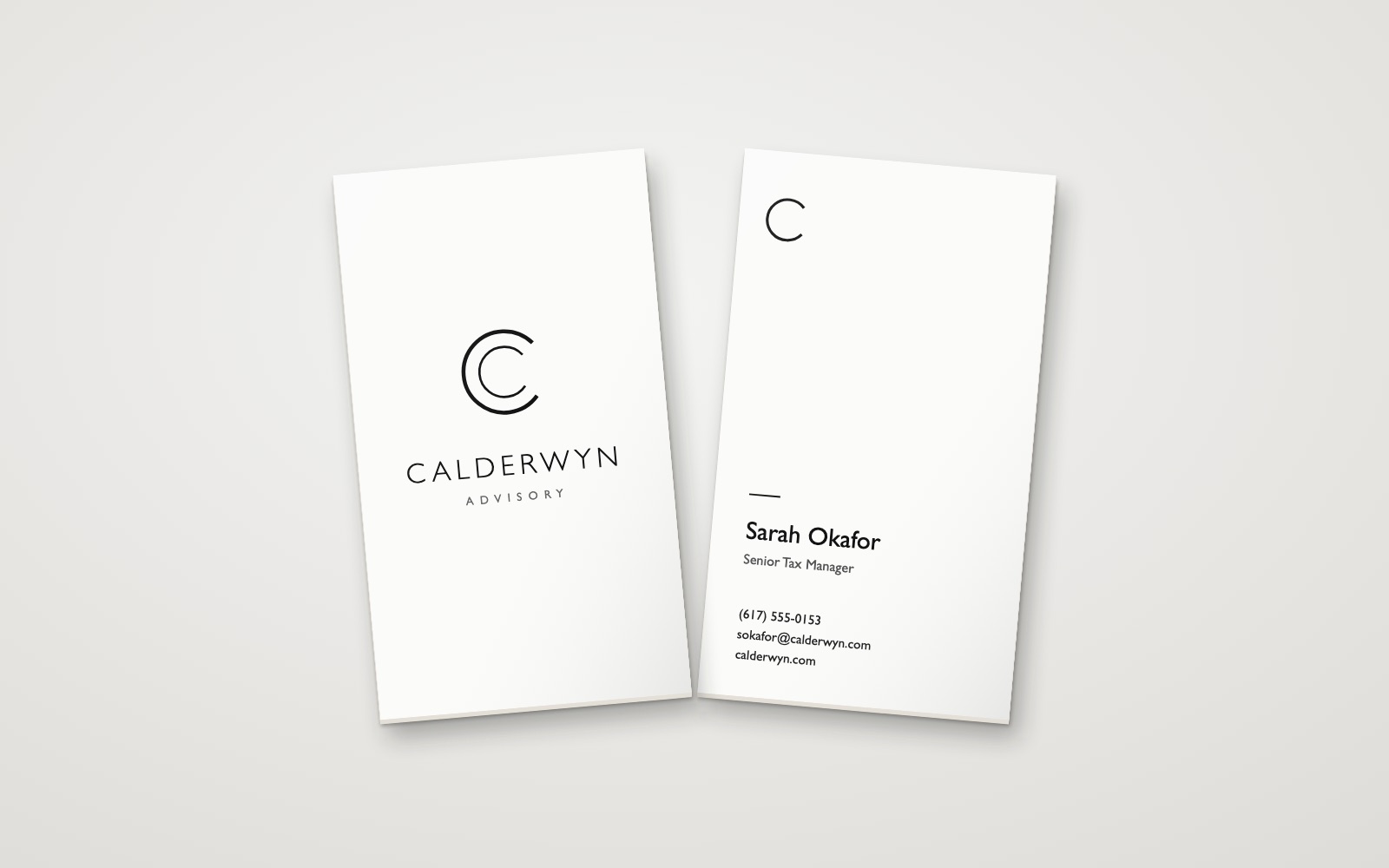
Works well for: accounting, consulting and professional services. Paper: Premium Bright White (16 pt).
2. A full color block
Fill the front with your brand color and set the name large. The back stays white for easy reading. A tall card gives the color more room than a horizontal one does.
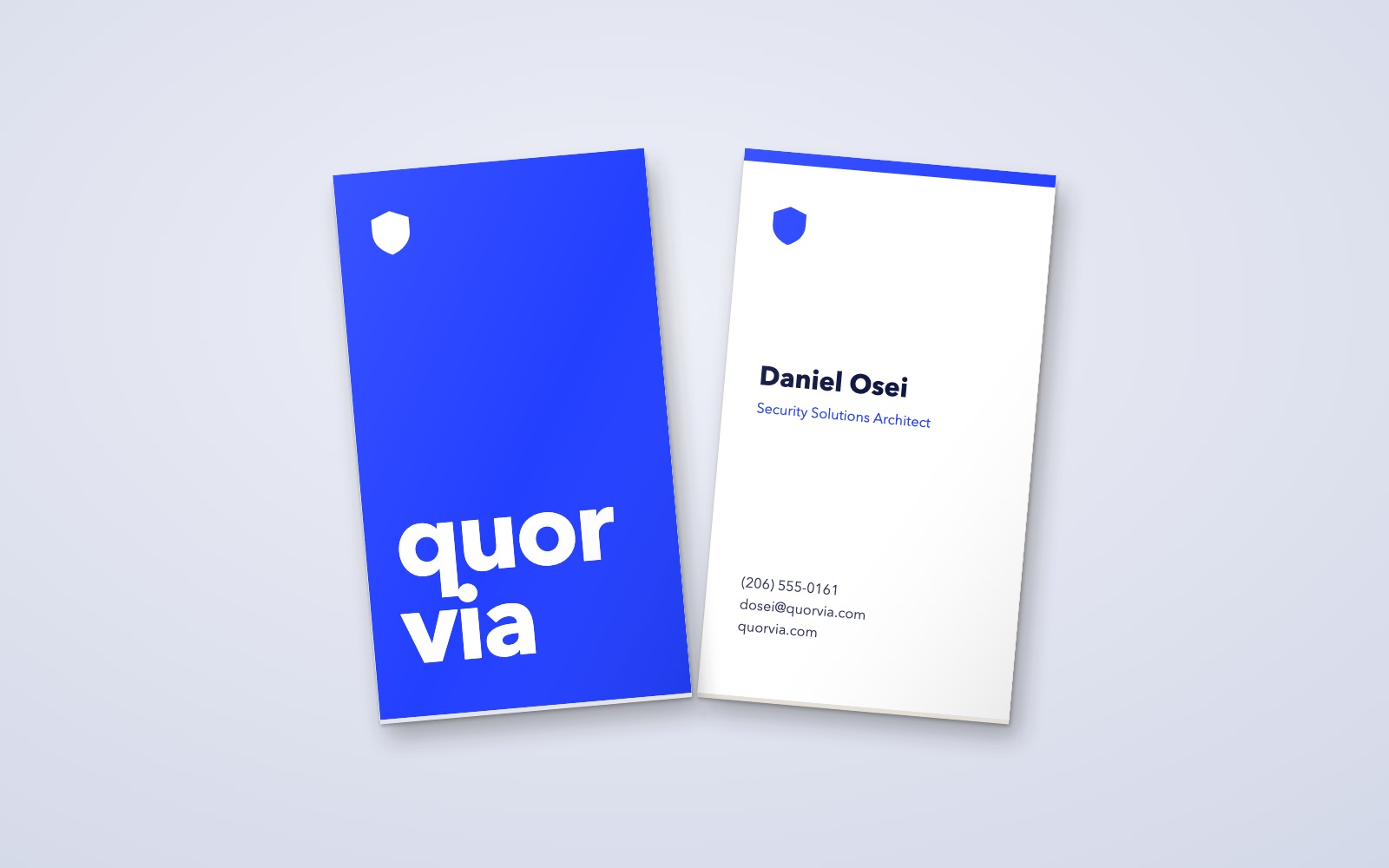
Works well for: tech companies and startups. Paper: Premium Gloss (16 pt), which keeps bright colors vivid.
3. Big, stacked type
Break the company name onto two lines and make it as big as the card allows. A strong two-color palette makes it look confident.
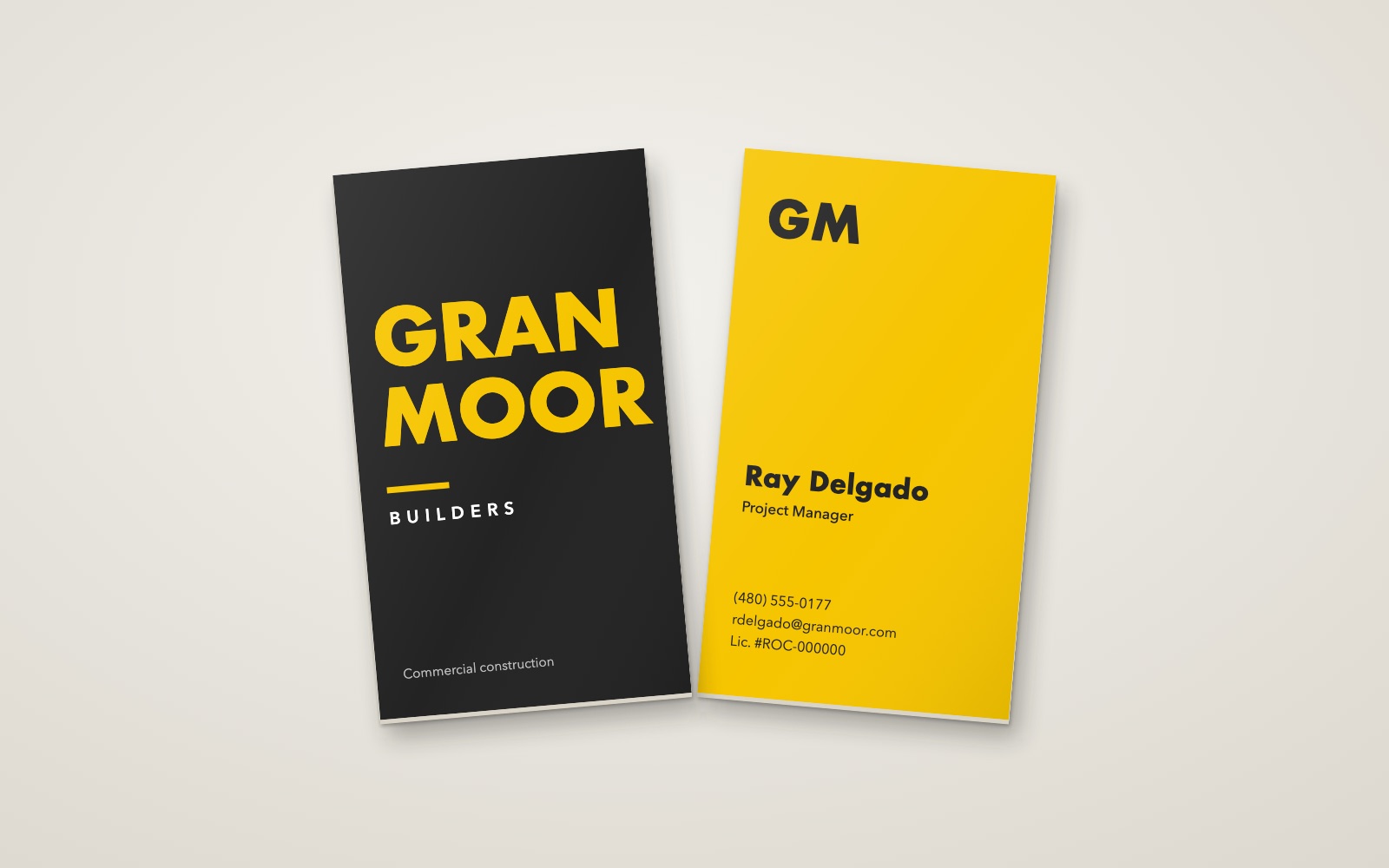
Works well for: construction, trades and manufacturing. Paper: Standard Matte (14 pt) or Premium Matte (16 pt).
4. Spot gloss pattern
A shiny pattern printed over a velvety black card. It’s almost invisible until the card catches the light. Keep the name and contact details matte so they’re easy to read.
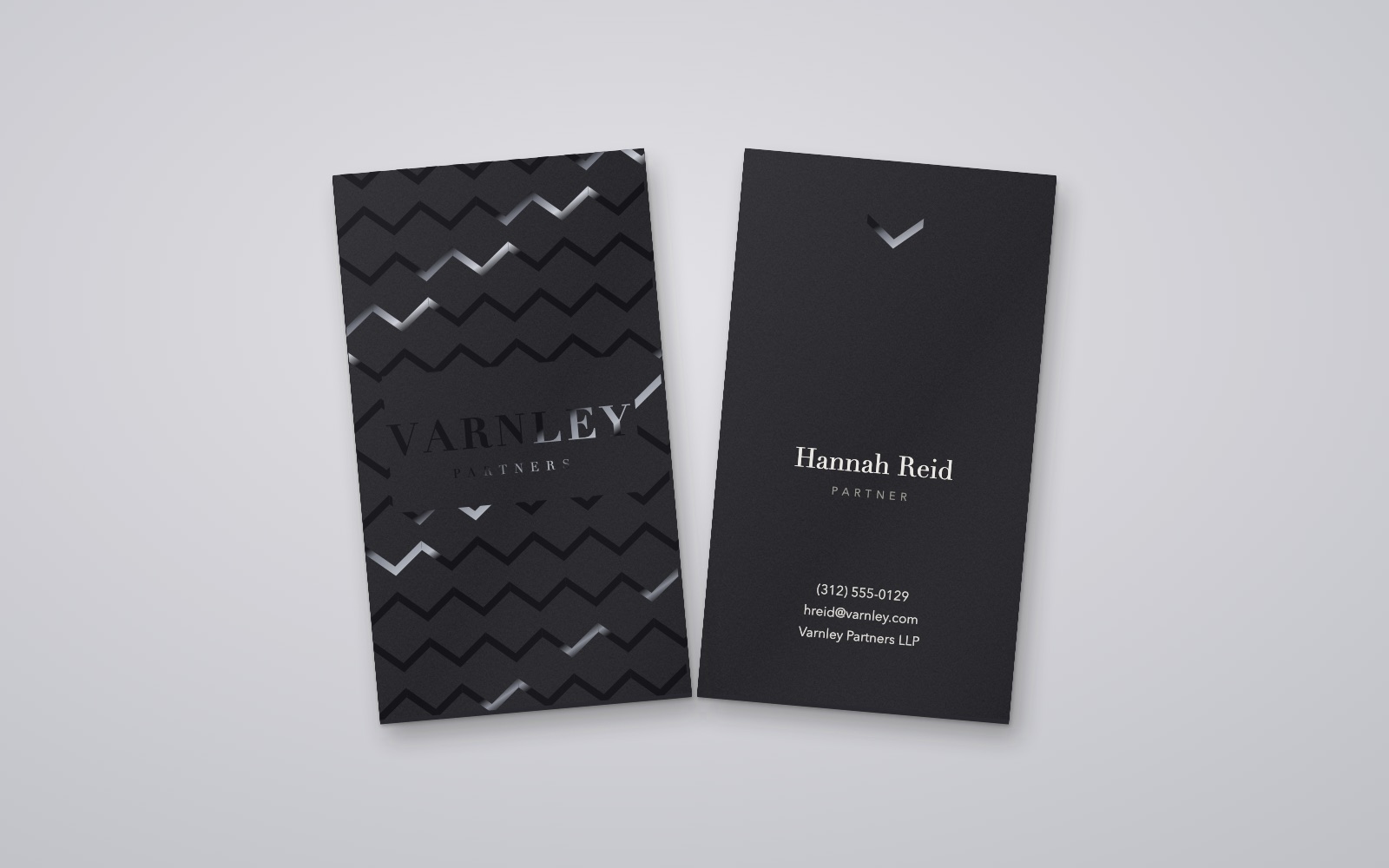
Works well for: law firms, finance and luxury brands. Paper: Soft-Touch + Spot Gloss (18 pt).
5. Gold foil on a deep color
A centered foil logo on a rich color looks formal and expensive. Pair it with a light back so the contact details are easy to read.
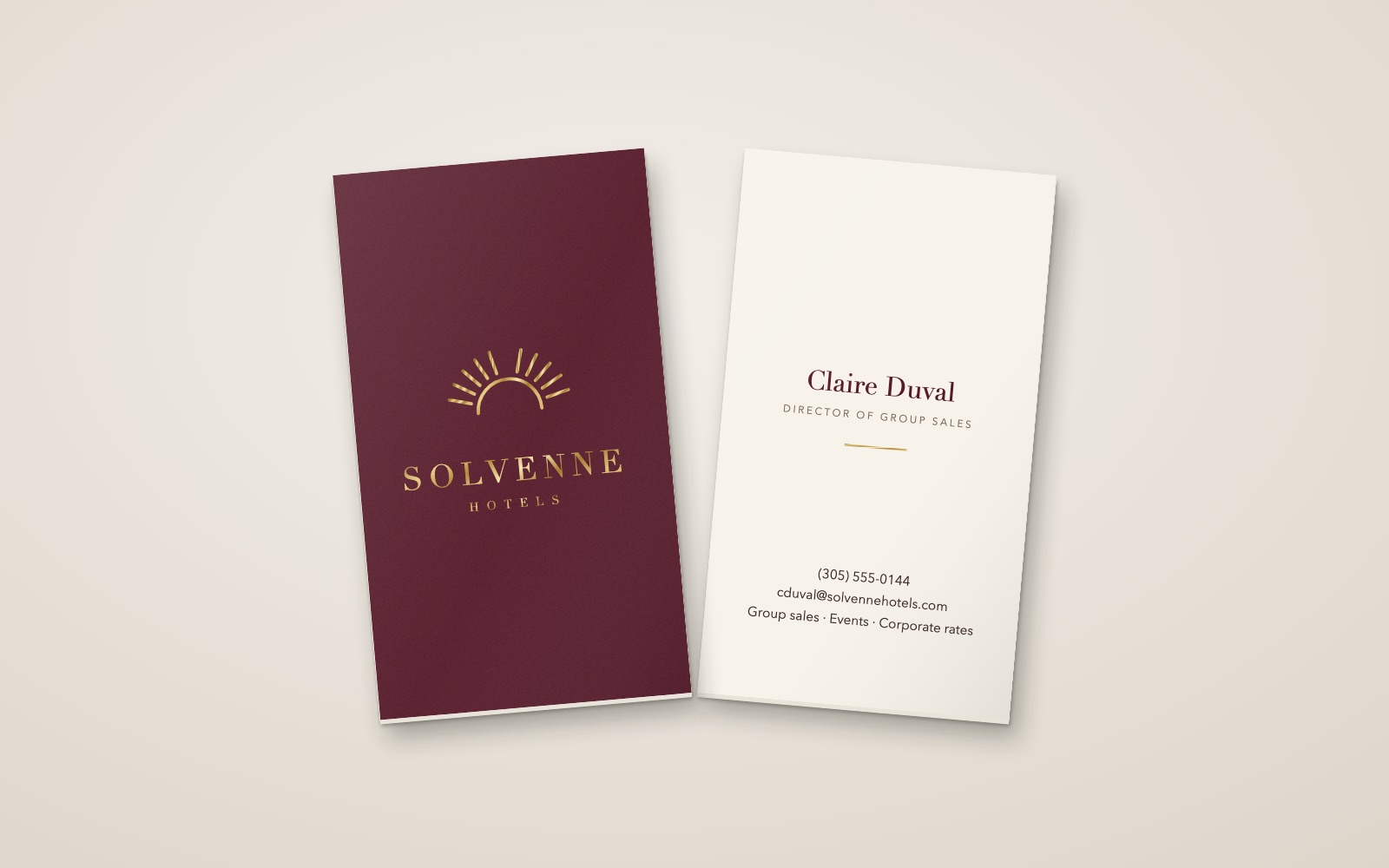
Works well for: hospitality, real estate and professional firms. Paper: Soft-Touch + Foil or Premium Matte + Foil, in gold or silver.
6. Kraft paper and a line logo
A simple line logo in black ink on brown, recycled kraft paper. It feels natural and down to earth, which suits companies that sell practical products.
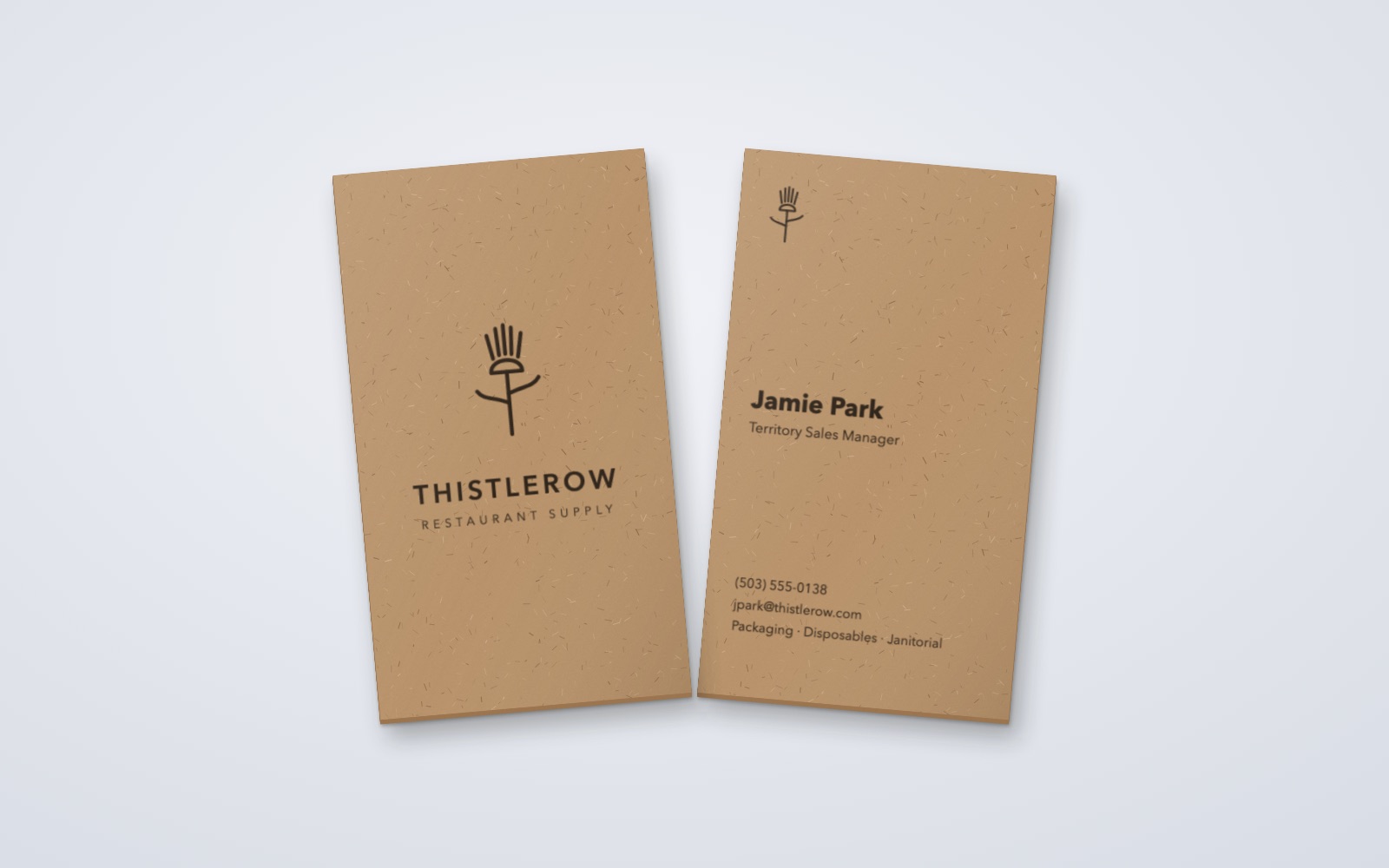
Works well for: distributors, food service and sustainable brands. Paper: Kraft Paper (18 pt, 100% recycled).
7. Painted edges
A clean white card with a colored edge. The color shows when the card is picked up or sitting in a stack, so the front can stay simple.
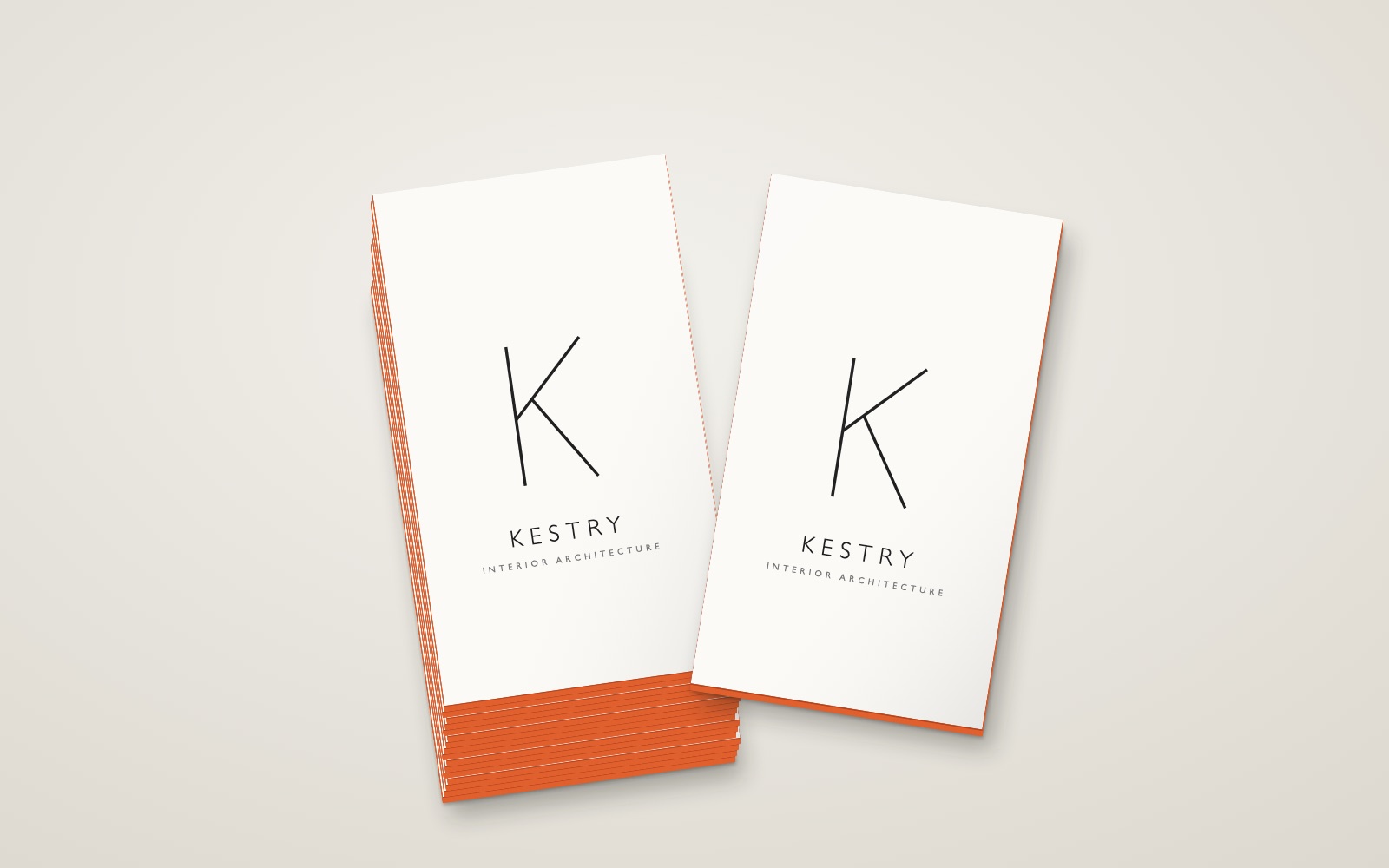
Works well for: architects, designers and agencies. Paper: painted edge cards, in more than a dozen edge colors.
8. Black color core
A thick card with a black layer in the middle, so a black stripe runs around the edge. Keep the front minimal and let the edge do the talking.
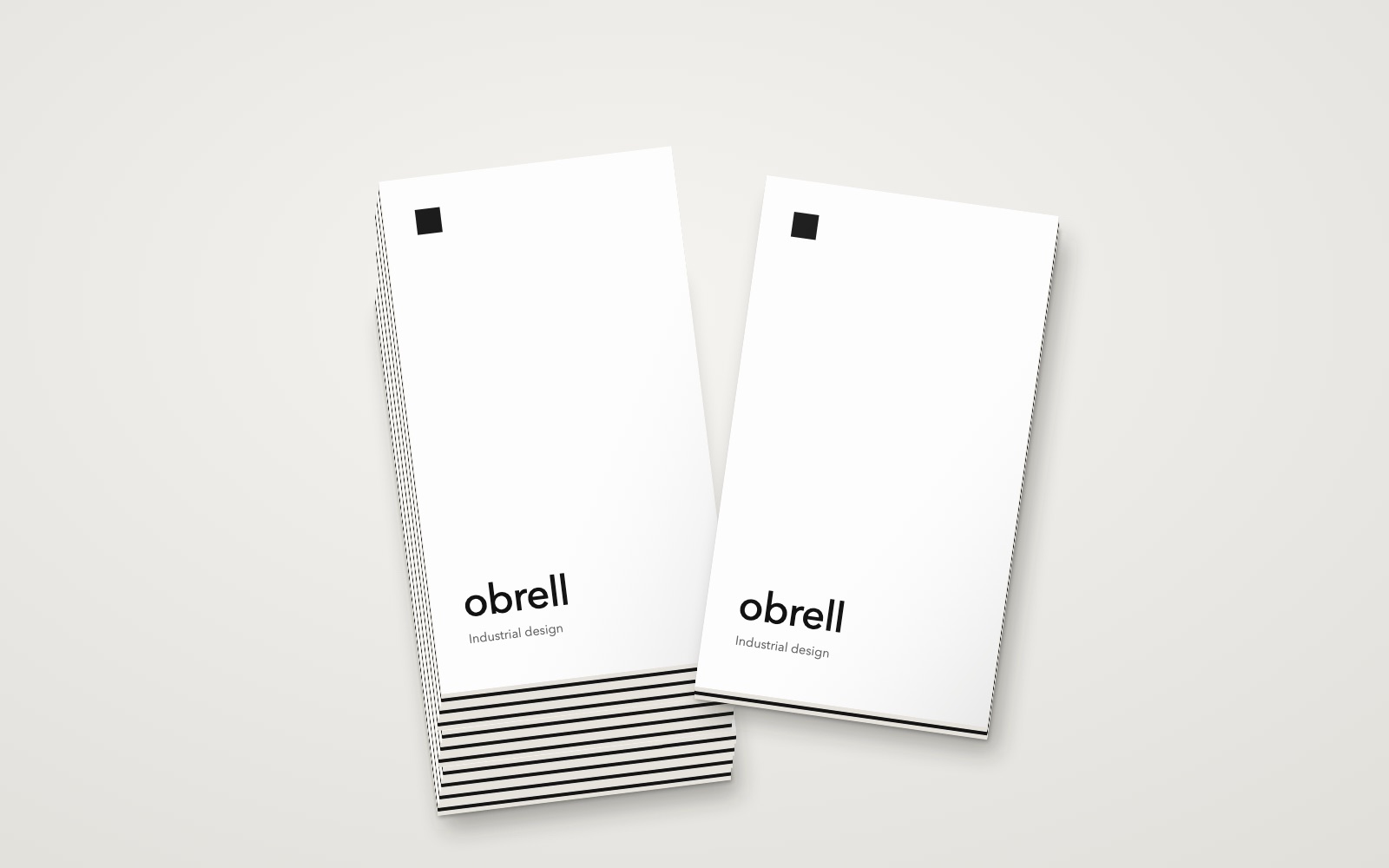
Works well for: design studios, executives and engineering firms. Paper: Black Color Core (32 pt).
9. Rounded corners
Rounded corners make a tall card feel like an app or a phone screen. They suit companies whose logo is already a rounded icon.
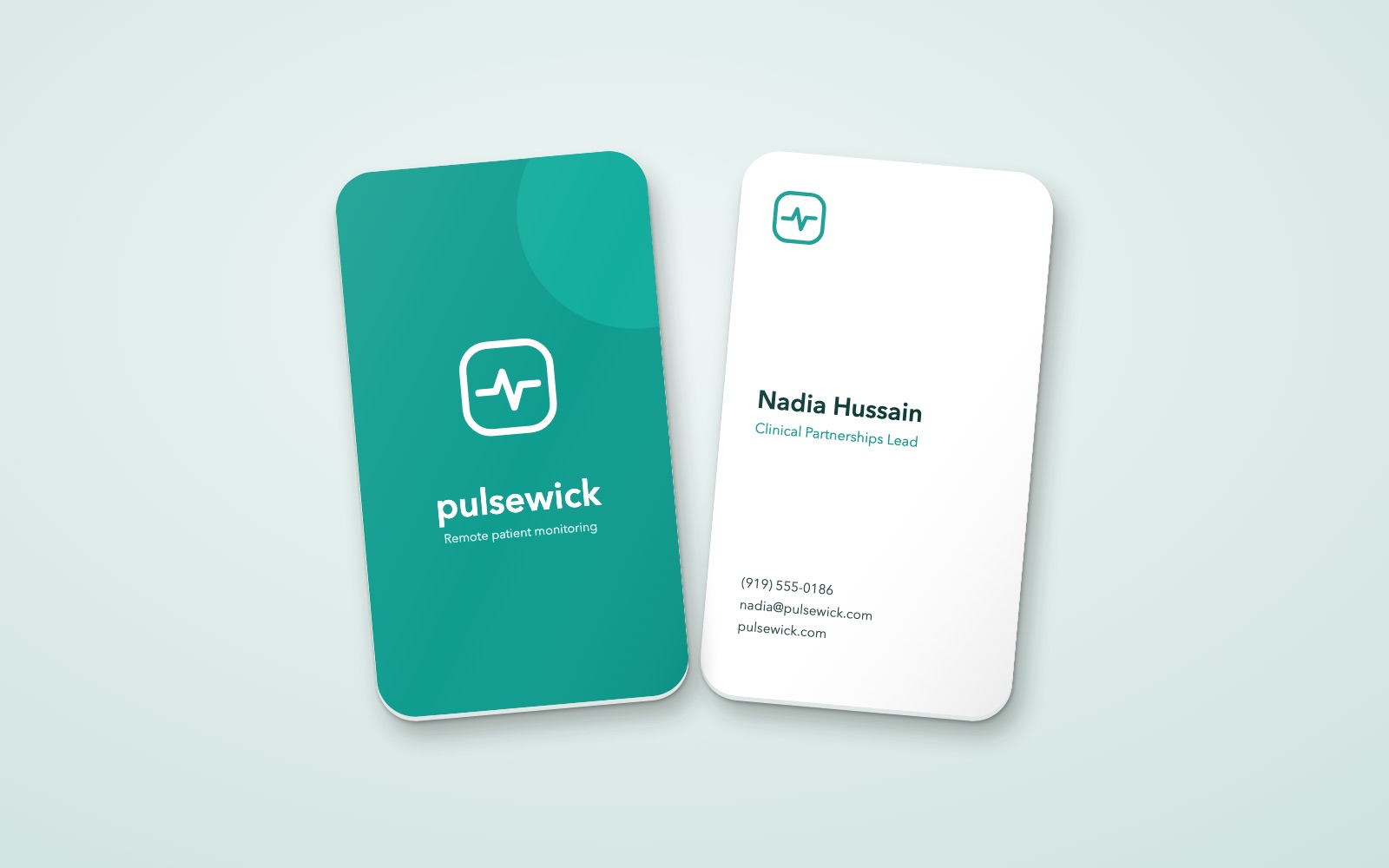
Works well for: health tech, software and startups. Paper: most papers can have 1/4 inch rounded corners, including standard, premium and soft-touch.
10. A large QR code on the back
A tall back leaves room for a QR code big enough to scan easily, with the person’s name above it and a short label telling people what it does.
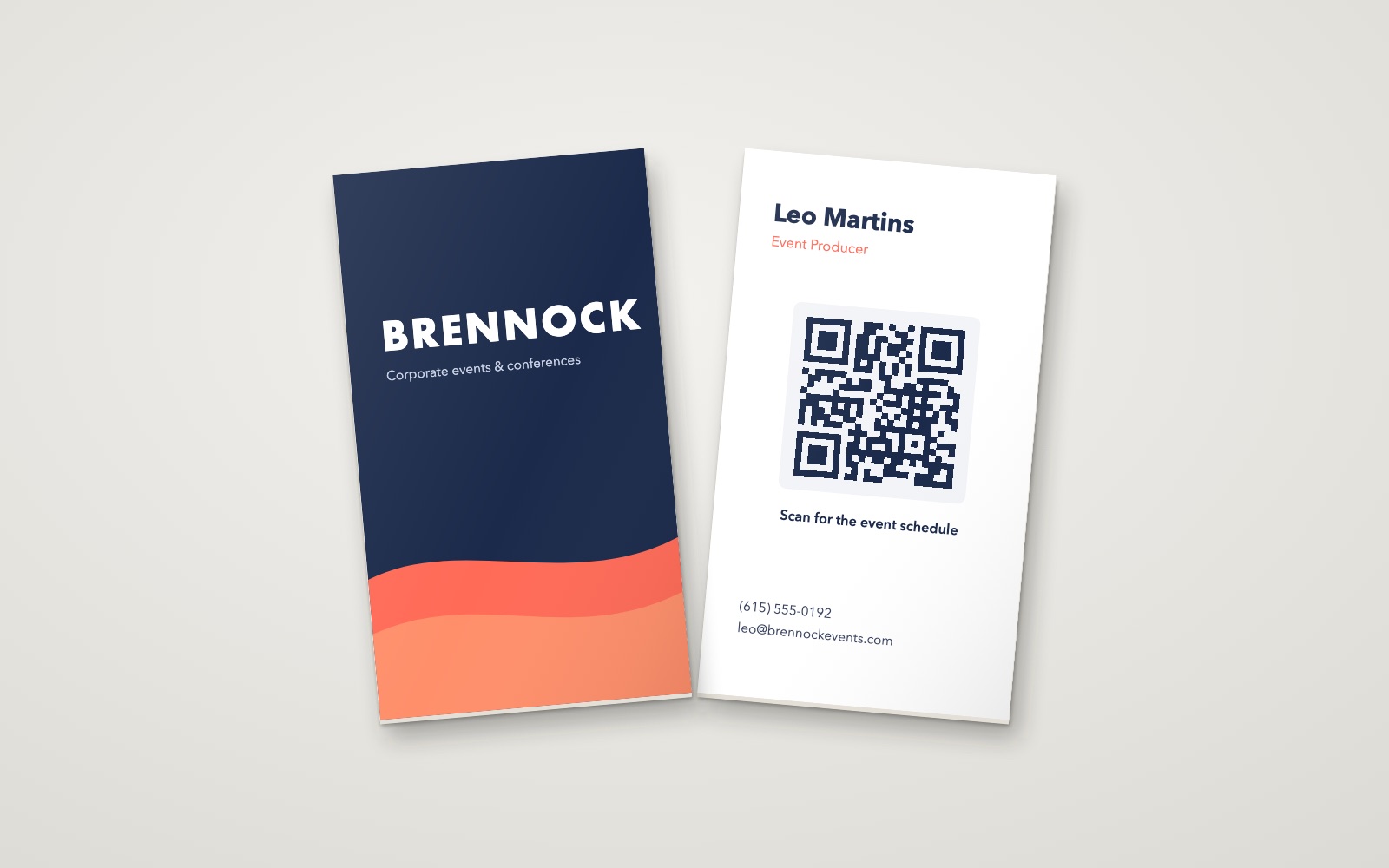
Works well for: events, recruiting and sales teams. Paper: any paper. See everything you need to know about QR codes on business cards.
11. One design, a color for each team
Keep the layout the same and change one color for each division. Every card is clearly from the same company, and it’s easy to see who works in which part of it.
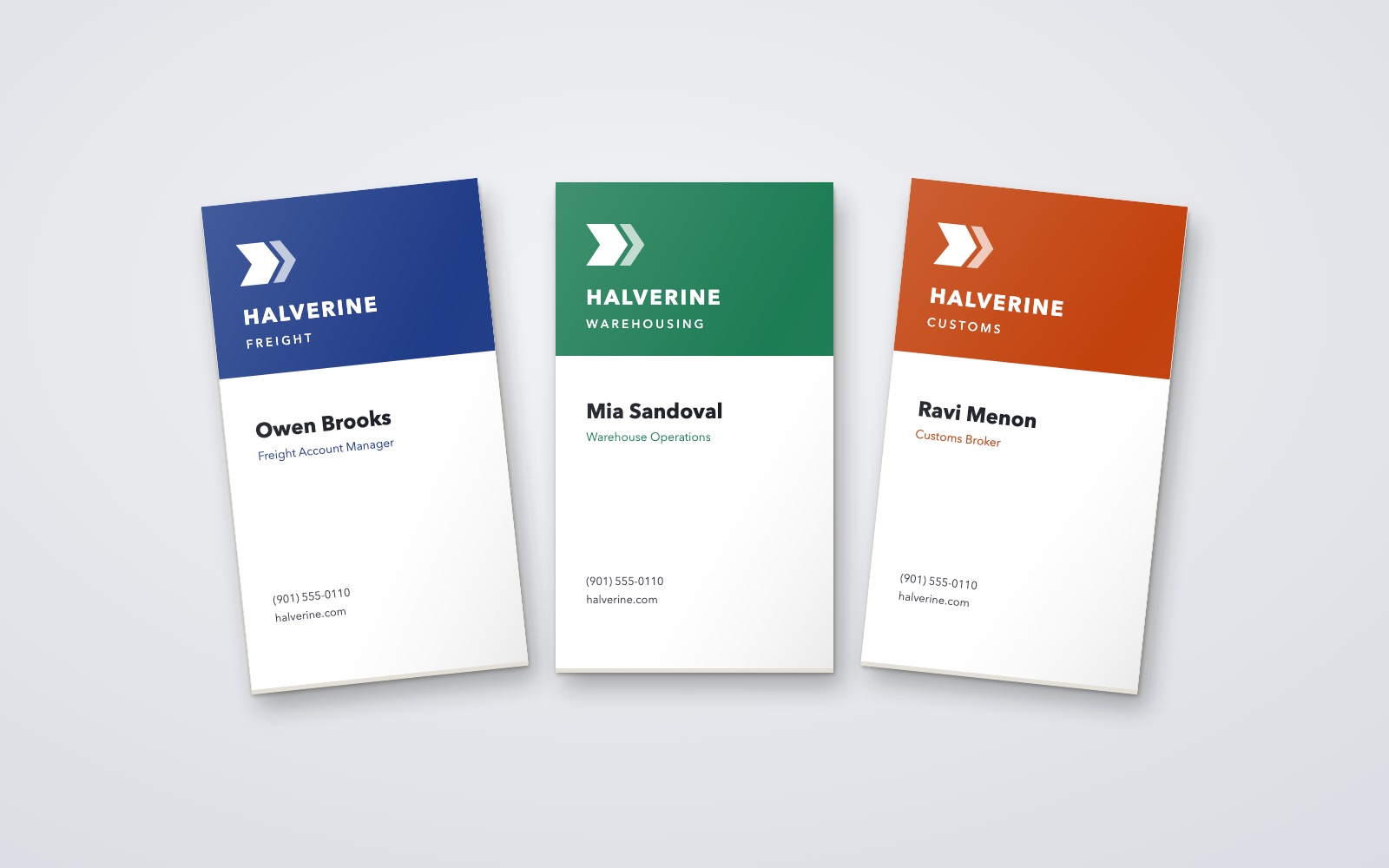
Works well for: companies with several divisions, regions or brands. Paper: any paper. With a business card portal, each division gets its own template and employees fill in only their details.
12. A vertical front with a horizontal back
Use the vertical front for the logo and the horizontal back for contact details, where longer lines fit better. It’s a good compromise when titles or email addresses are long.
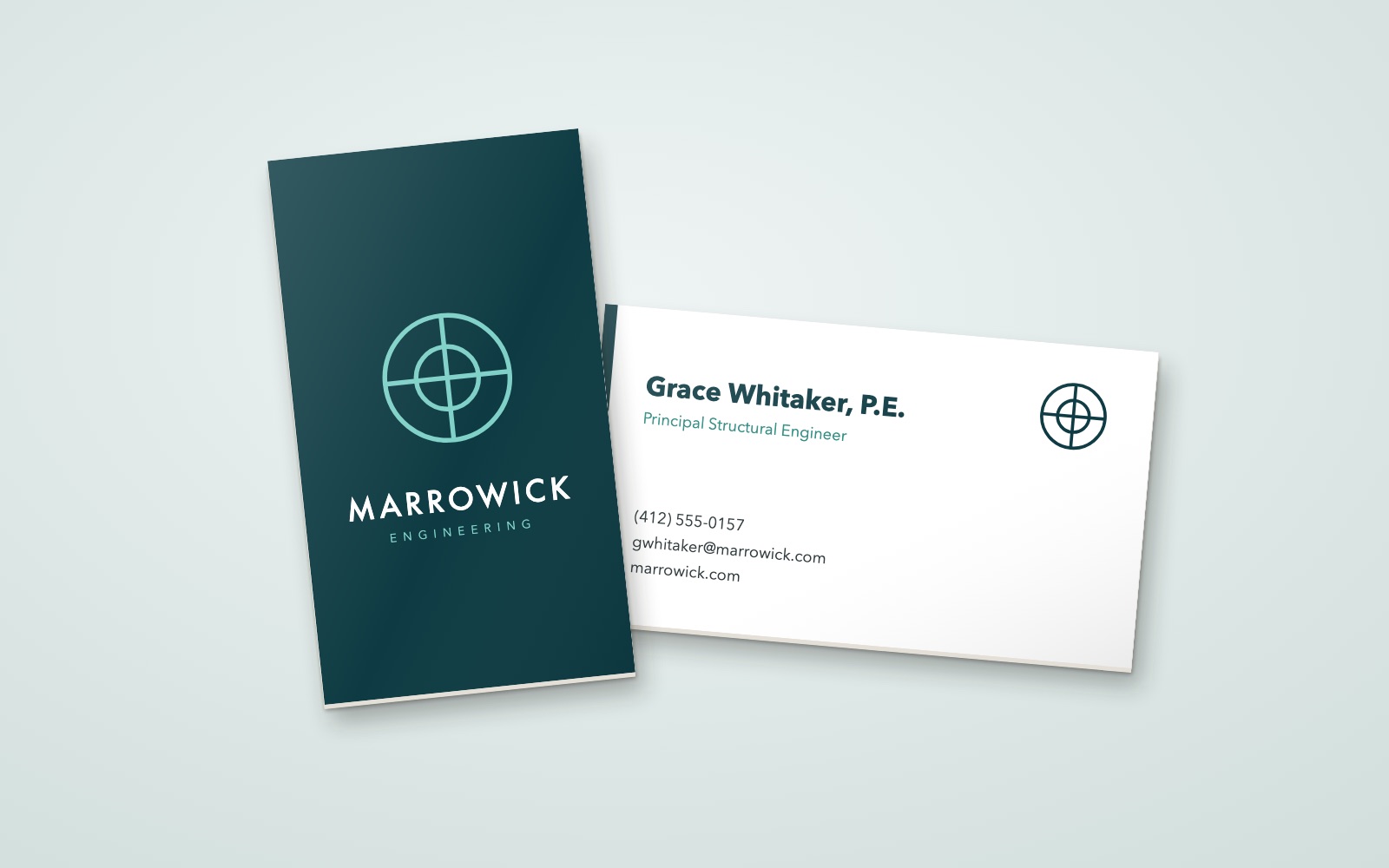
Works well for: engineering, healthcare and any role with a long title. Paper: any paper.
Tips for designing a vertical business card
- Read top to bottom. Put the logo near the top and contact details near the bottom, with space between them.
- Keep lines short. If an email address or title is too long for one line, consider a horizontal back.
- Don’t shrink the text to fit. Keep contact details at least 7 to 8 points.
- Use the height. Big type, a tall logo or a large color block are what make a vertical card worth choosing.
- Match the orientation across the team. Every employee’s card should use the same layout.
For more design rules, see the 10 essential rules for designing a business card, or browse more business card ideas.
Vertical business card FAQs
What size is a vertical business card?
In the US, a vertical business card is 2 x 3.5 inches (51 x 89 mm), the same as a horizontal card turned on its side. With a 1/8 inch bleed on each side, set up your file at 2.25 x 3.75 inches. In the UK and Europe, a vertical card is 55 x 85 mm, or 61 x 91 mm with bleed.
Do vertical business cards cost more?
No. A vertical card is the same size and uses the same paper as a horizontal one, so the price is the same. Only the layout changes.
Are vertical business cards professional?
Yes. Plenty of law firms, banks and engineering firms use vertical cards. What makes a card look professional is clean type, good paper and consistent branding, not its orientation.
Can the front be vertical and the back horizontal?
Yes. Each side is printed from its own artwork, so you can design a vertical front and a horizontal back. Just make sure both sides are set up at the right size for their orientation.
Do vertical cards fit in card holders and wallets?
Yes. They’re the same size as horizontal cards, so they fit any standard card holder, wallet or desk stand. In a stack of horizontal cards, a vertical card stands out because it reads the other way.
The takeaway
A vertical business card is the same 2 x 3.5 inch card turned on its side. It costs the same, fits the same holders and stands out in a stack. Use it when your logo is tall, your text is short or you want a bold design, and stay horizontal when names, titles or contact details run long.
Set Up Your Free Business Card Portal
Get Started