PunchOut for Business Cards: Ordering Inside Coupa and Ariba
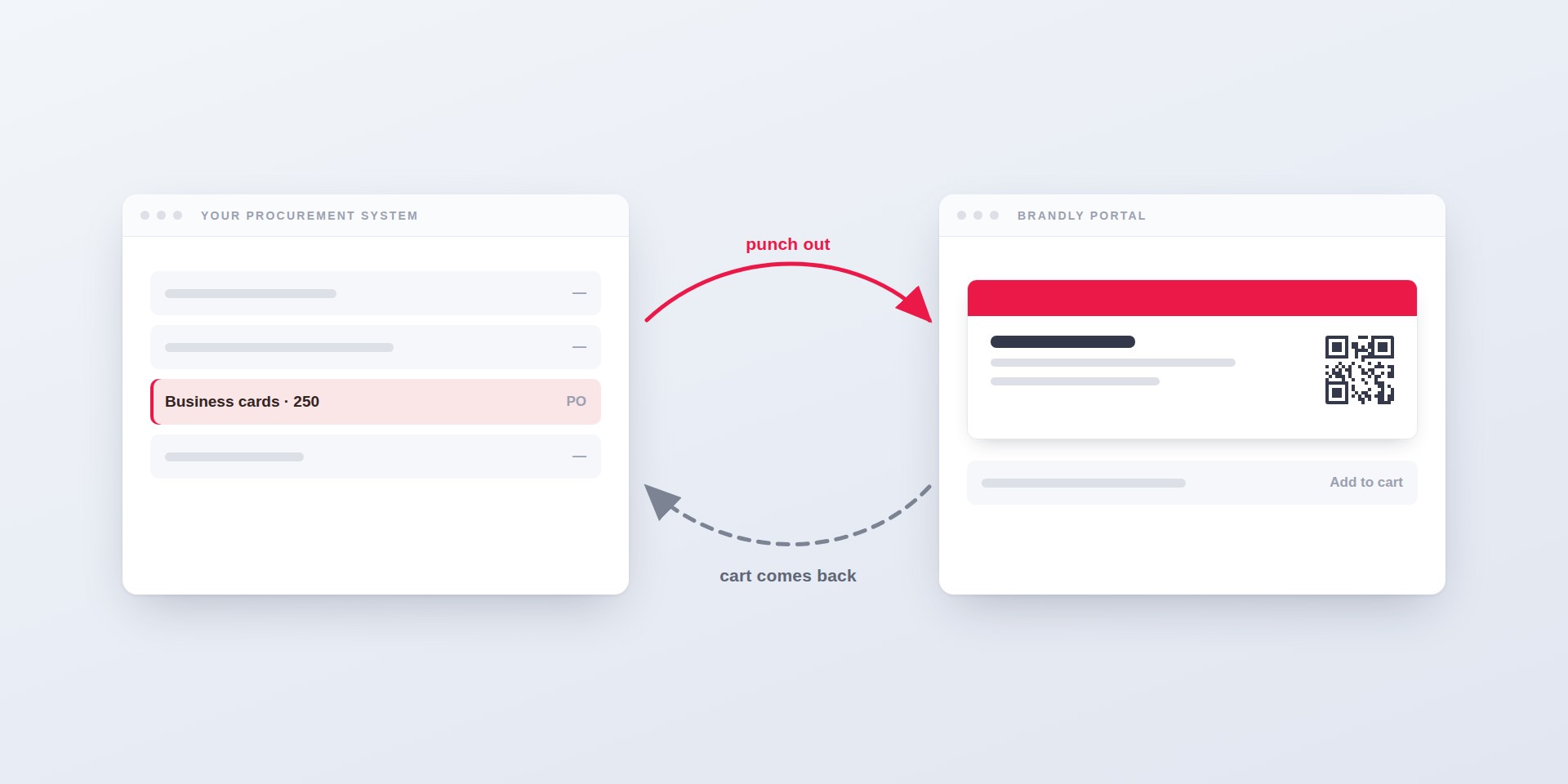
Your company buys almost everything through its procurement system. Laptops, furniture, software licenses — requisition, approval, purchase order, done. Then someone needs business cards, and the whole thing falls out of the process: a separate portal, somebody’s corporate card, a receipt forwarded to finance, and a line of spend nobody in procurement can trace back to a PO.
PunchOut closes that gap. It lets your team order business cards from inside Coupa, SAP Ariba or TradeCentric, under the same approvals as everything else they buy.
What PunchOut actually does
A PunchOut catalog is a supplier’s store that opens from inside your procurement system. Rather than your buyers browsing a static price list your team has to keep current, they “punch out” to the supplier’s live site, shop it, and bring the cart back for approval.
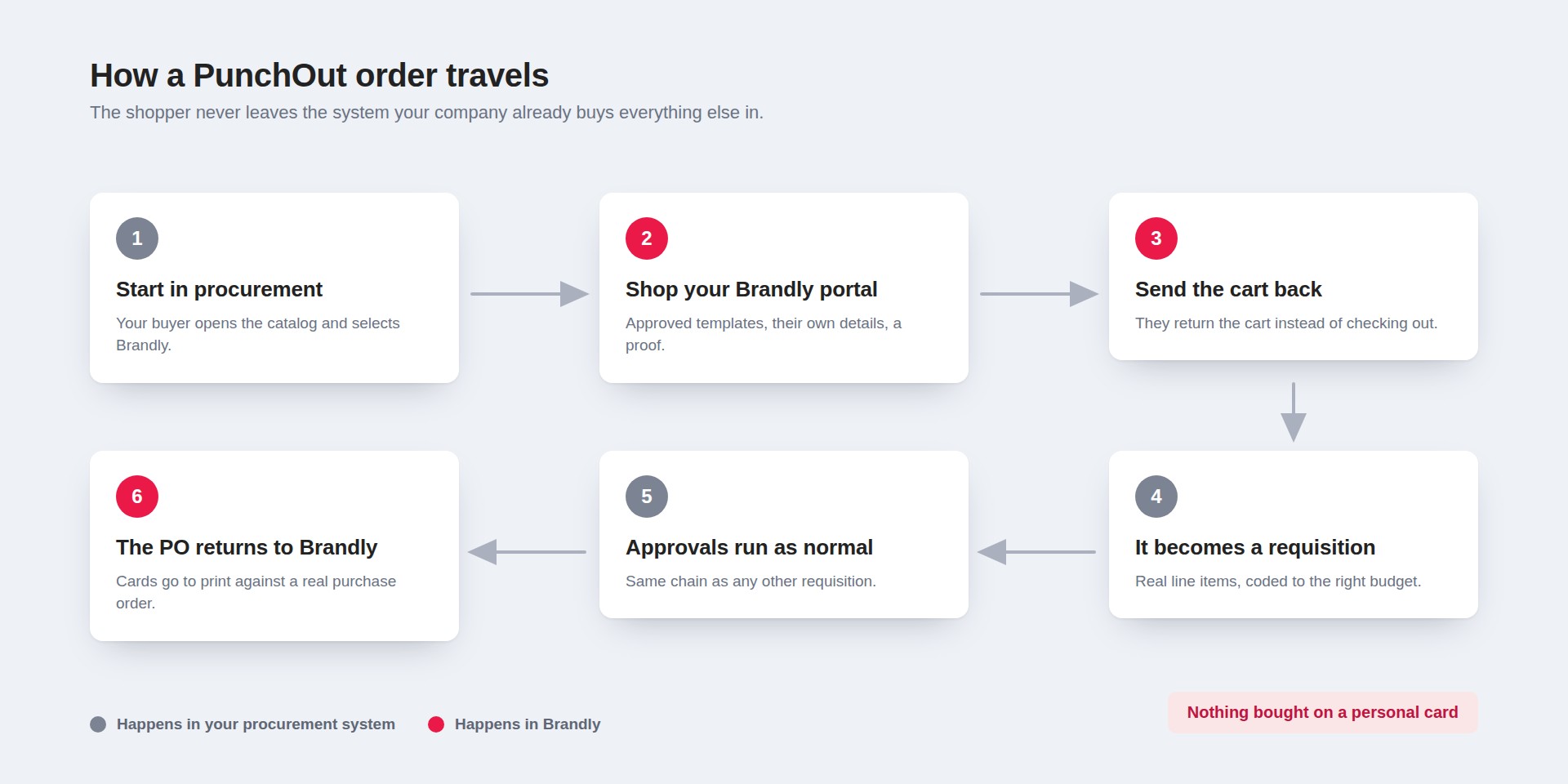
For business cards, the round trip looks like this:
- A shopper starts in Coupa or Ariba and selects Brandly from the catalog.
- They land in your company’s Brandly portal, already signed in, looking at the templates your brand team approved.
- They fill in their own details and build a cart.
- Instead of checking out, they send the cart back to procurement.
- The cart becomes a requisition and goes through your normal approval chain.
- The approved purchase order returns to Brandly, and the order goes to print.
Nobody leaves the system they already buy everything else in, and procurement stops treating business cards as an exception.
What the person ordering sees
Very little that’s new, which is the point. They see their own card template, the fields they need to fill in, and a proof before anything prints. There’s no second login to remember and no company card to borrow.
What procurement sees
A requisition like any other, with real line items, correct coding, and spend recorded against a supplier that’s already been onboarded. Card orders stop being a recurring expense report and start being a purchase.
You might not need PunchOut at all
This is the part that gets conflated, and it’s worth being clear about before you commit anyone’s IT time. There are two different integrations here. Both use cXML, and they solve different problems.
PunchOut moves the shopping into your procurement system. Your buyers requisition cards the same way they requisition anything else.
cXML invoice delivery moves the invoice into it. Your team keeps ordering on Brandly exactly as they do today. When the invoice is issued, Brandly renders it as cXML and posts it straight to your accounts payable endpoint, so it arrives in Coupa as a structured invoice instead of a PDF sitting in somebody’s inbox. Nothing about how people order changes.
Invoice delivery works with no PunchOut at all.
Which one do you need?
- If the problem is approval before spend — buyers should raise a requisition, budget-holders should approve it, and cards shouldn’t be bought on a personal or departmental card — you want PunchOut.
- If the problem is invoices arriving as PDFs that AP has to re-key, you want invoice delivery. It’s a much lighter lift, and it doesn’t touch the ordering experience.
- If both are true, invoice delivery is usually the faster of the two to stand up, and PunchOut can follow.
Plenty of teams never need PunchOut. If your card spend is modest and your real friction is on the finance side, the smaller integration is the right answer.
What setup involves
PunchOut isn’t a setting you switch on. It needs someone on your side who works with cXML — usually whoever administers your Coupa or Ariba instance — and configuration on ours. The two sides exchange endpoints and credentials, run a test punchout session to confirm the round trip works, and then go live. Because of that, it starts with a conversation rather than a signup form.
Invoice delivery is lighter. It needs your AP endpoint and credentials, plus a few billing decisions: who the invoice goes to, your terms (Net 15 by default, payable by ACH or credit card), and whether invoices go out for every order, monthly, or twice a month.
Either way, the brand controls you already have stay exactly as they are. Templates, locked fields, approvals, who can order what — none of that changes because the order arrived through a purchase order.
Where to start
If you’re evaluating Brandly against a procurement requirement, the useful first question isn’t “do you support PunchOut” — it’s which of these two problems you’re actually trying to solve. We can usually tell you within a call which integration fits, and roughly what your IT team would need to do.
If you’re earlier than that and still working out how card ordering should run across a growing team, what a business card portal is and how larger companies manage card ordering are better places to begin.
Set Up Your Free Business Card Portal
Get Started