Business Card Trends: What 1,500+ Companies Actually Order
Original data from business card orders placed by more than 1,500 organizations from 2020 to 2026: the most popular paper stocks, finishes, corners, orientation, box sizes and what people now print on their cards.
 By Brandly Team
Inspiration
On this page
In business card orders from more than 1,500 organizations between January 2020 and October 2026, Premium Matte (29%) and Premium Bright White (28%) were the most popular papers, and the share of orders on premium or specialty paper rose from 69% to 80%. Most people order 100 cards at a time (56%). Rounded corners (about 10%) and vertical layouts (about 6%) are niche. Cards are carrying fewer addresses and phone numbers and more credentials, links and pronouns, and 13% of companies added a digital business card or QR code in 2026.
Most business card advice is opinion. This is what companies actually order. We looked at business card orders placed through Brandly by more than 1,500 organizations over nearly seven years, from small firms to large national teams, and measured what they chose: paper, finish, corners, orientation, quantity and the details printed on the card.
About the data
- Sample: business card orders placed through Brandly by more than 1,500 organizations, January 2020 to October 2026. Only delivered or shipped orders are counted.
- Each company counts equally. Percentages are averaged per company, so one very large customer can’t skew a result. For example, “29% Premium Matte” means the average company put 29% of its card orders on Premium Matte.
- 2026 covers January through October.
- What’s printed is measured on orders where employees filled in their details in a Brandly template. Cards uploaded as finished print files aren’t included in that section.
The most popular business card paper
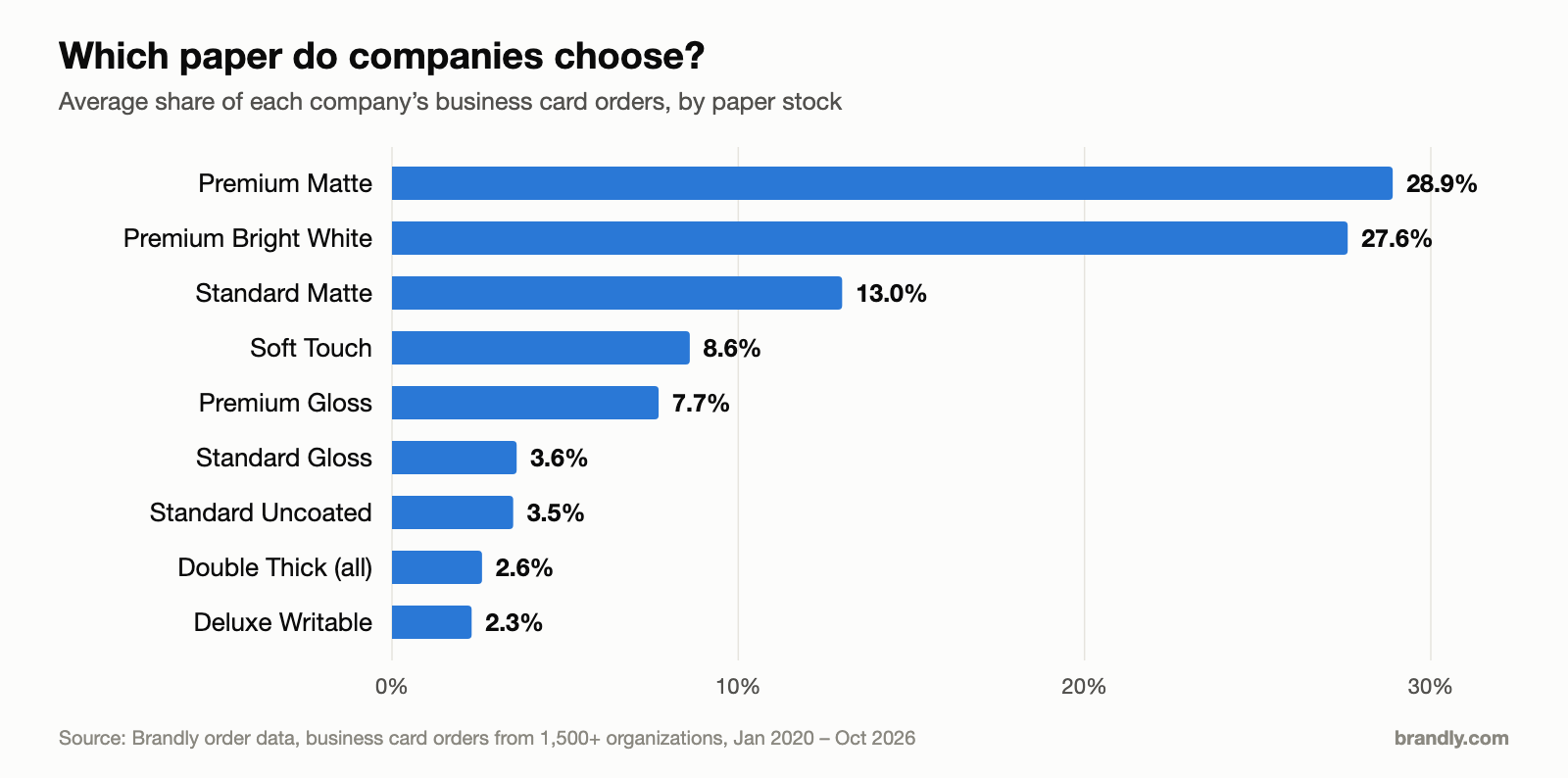
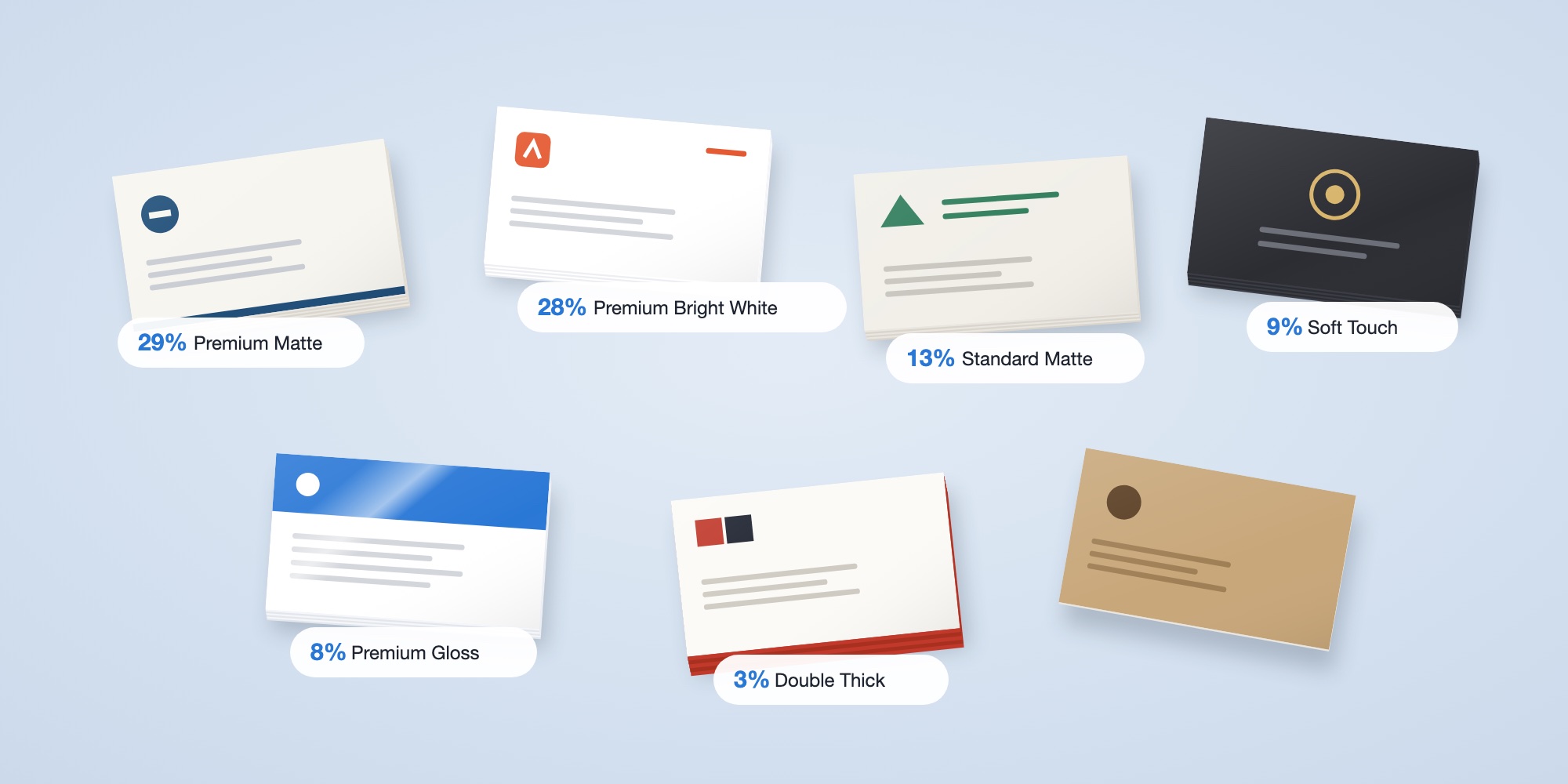
Two papers dominate: Premium Matte and Premium Bright White, at 29% and 28% of the average company’s orders. Both are 16 pt stocks, a step thicker than standard paper: Premium Matte is a smooth, low-glare coated paper that handles solid color well, and Premium Bright White is an extra-white uncoated paper that gives crisp type and logos. Standard Matte is a distant third at 13%.
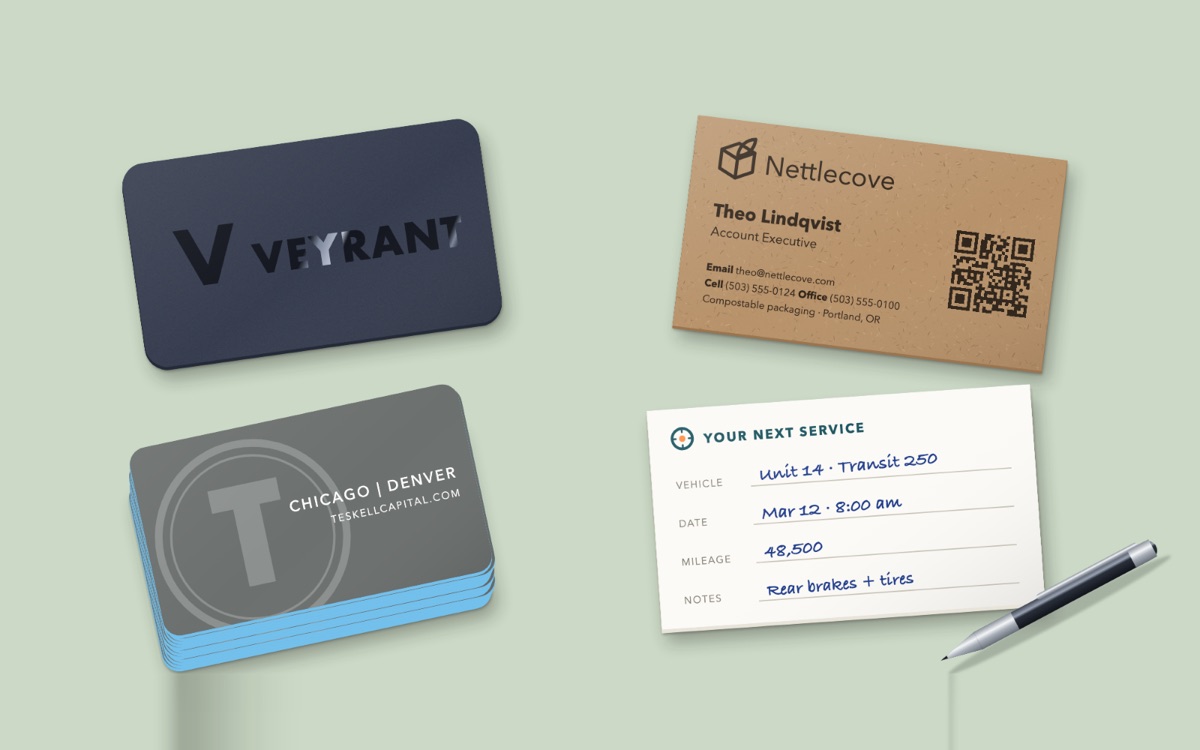
The rest is a long tail. Soft Touch, with its velvety feel, is 9%. Gloss papers together are about 11%. Specialty stocks like double thick, painted edge, kraft, linen and plastic add up to only a few percent, even though they get most of the attention in design roundups.
For the differences between these stocks, see how to choose a business card paper.
Companies keep trading up to premium paper
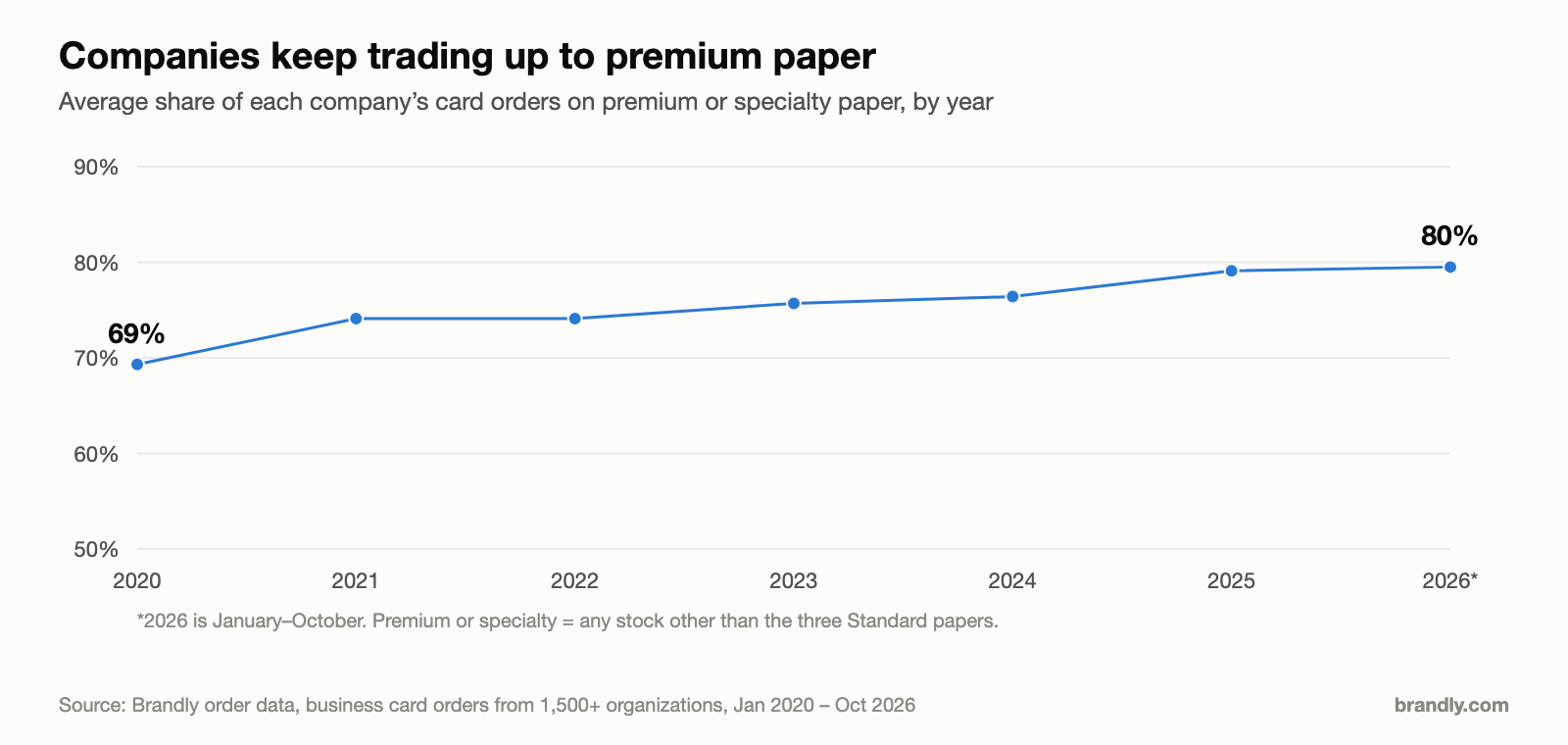
Every year, companies put a larger share of their cards on premium or specialty paper: from 69% in 2020 to 80% in 2026. Fewer people hand out cards than a decade ago, so each one has to make a better impression. Upgrading the paper is the simplest way to do that, and on a per-card basis it costs little.
Finishes, corners, orientation and sides
| Option | Share of the average company’s orders (2026) | Trend since 2020 |
|---|---|---|
| Rounded corners | 10% | Down slightly, from 13% |
| Vertical layout | 6% | Down, from 11% |
| One-sided | 8% | Down, from 11% |
| Spot gloss | 3% | Steady |
| Foil | Under 1% | Steady |
A few takeaways:
- Square, horizontal and two-sided is the standard. More than 9 in 10 orders are two-sided, and the share of one-sided cards keeps falling. The back of the card is now expected real estate for a logo, tagline or QR code.
- Rounded corners are a niche, not a fad. About a quarter of companies have ordered at least one rounded-corner card, but they make up only about 10% of orders.
- Vertical cards stand out because few people choose them. See vertical business card designs if you want to be in the 6%.
- Spot gloss and foil are rare. That’s exactly why they get noticed. Only about 6% of companies have ever ordered spot gloss.
How many business cards to order
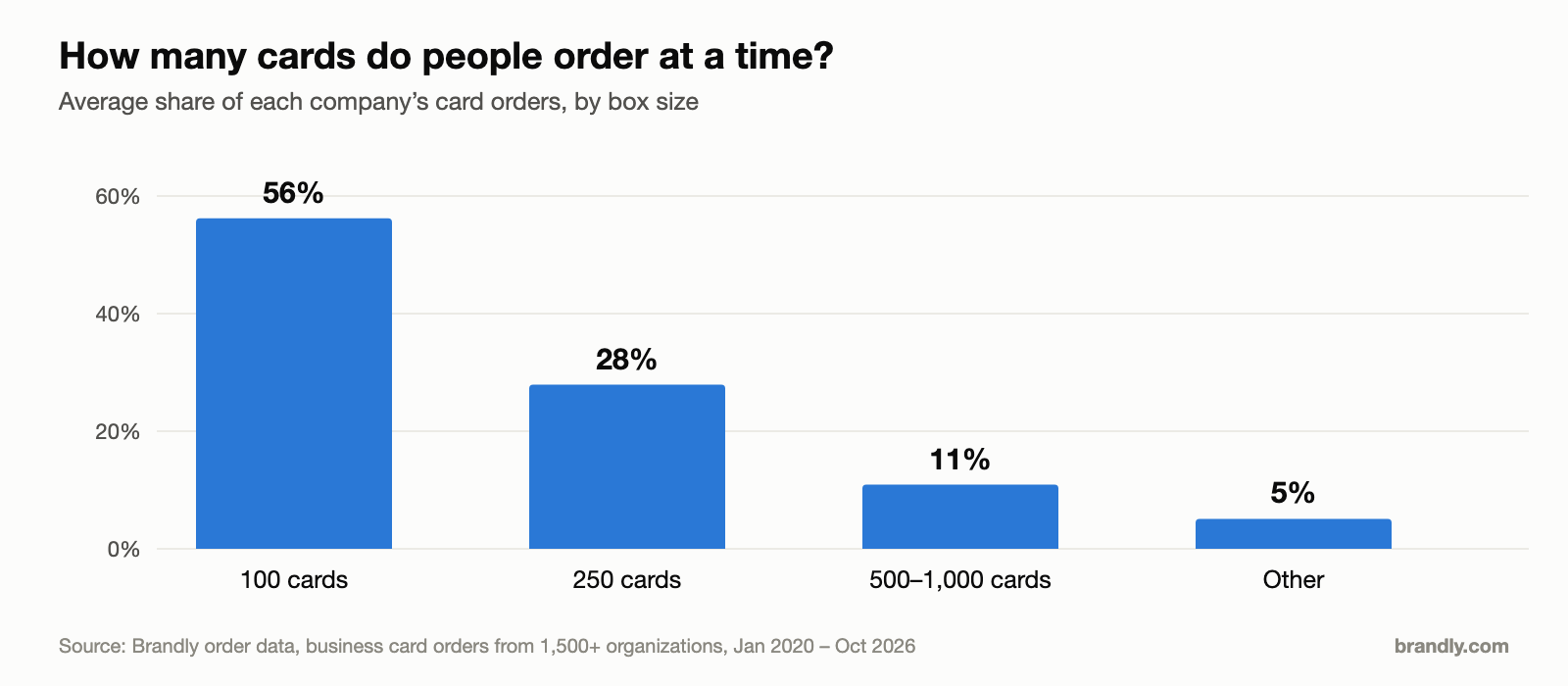
100 cards is the default. It’s 56% of the average company’s orders. 250 is next at 28%, and 500 to 1,000 is 11%, mostly for salespeople, trade show staff and anyone who hands out cards every day. The remaining 5% are other sizes.
For where cards ship and how often people reorder, see where business cards ship.
A practical rule: order 100 if you use a few cards a week, 250 if you use them daily or attend events, and 500 if cards are part of your sales process. A smaller box costs more per card but wastes less when titles and phone numbers change. For ordering for a whole team, see bulk business cards.
What goes on the card is changing
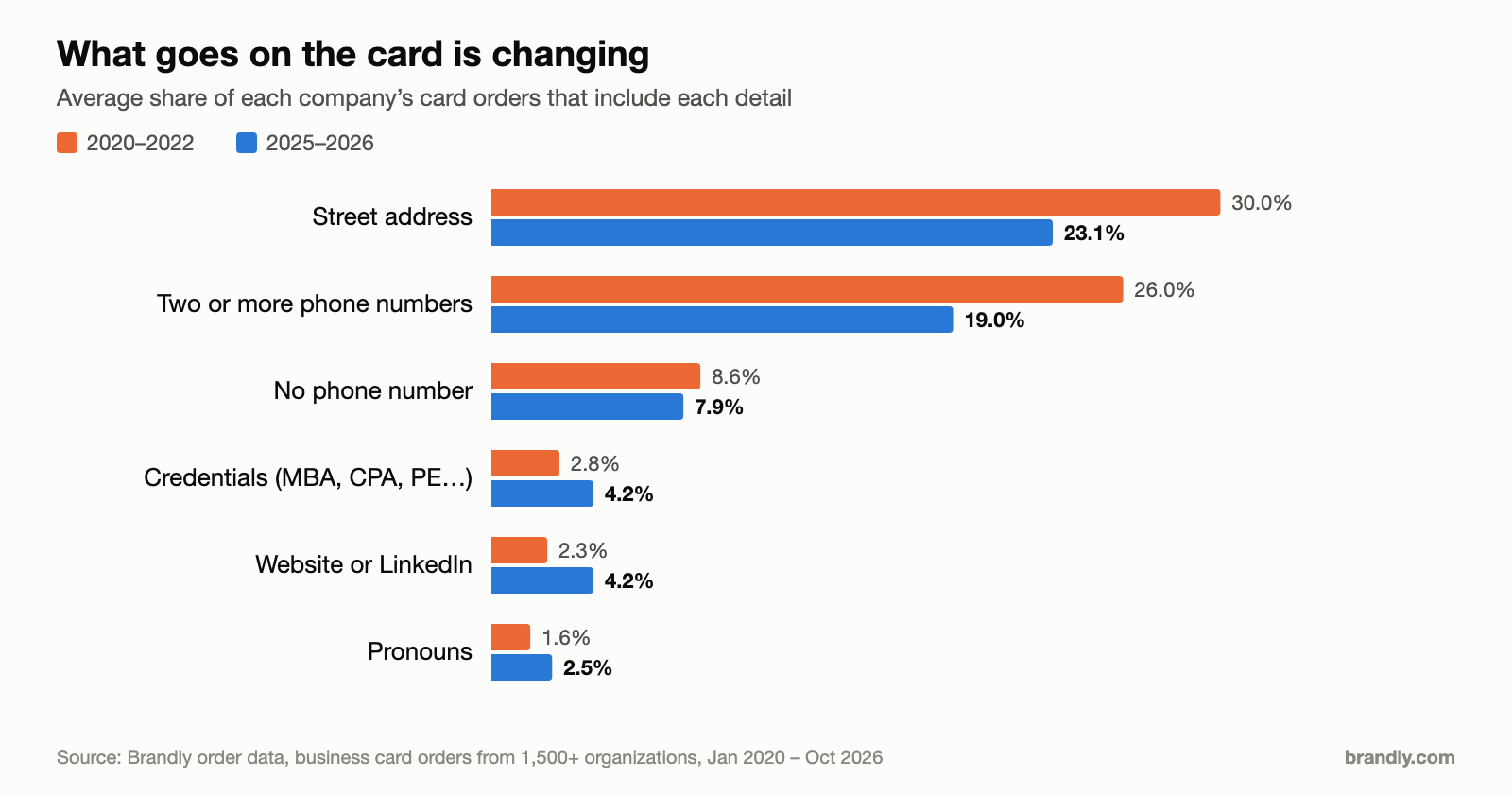
Comparing 2020–2022 with 2025–2026:
- Street addresses are disappearing. Cards with an address fell from 30% to 23% of orders. With hybrid and remote work, many employees don’t have one office address to print.
- Fewer phone numbers. Cards with two or more numbers, such as office and mobile, fell from 26% to 19%. Most people now list one number, usually a mobile.
- Credentials are up, from 2.8% to 4.2%. Letters like MBA, CPA or PE after a name are a quick signal of expertise.
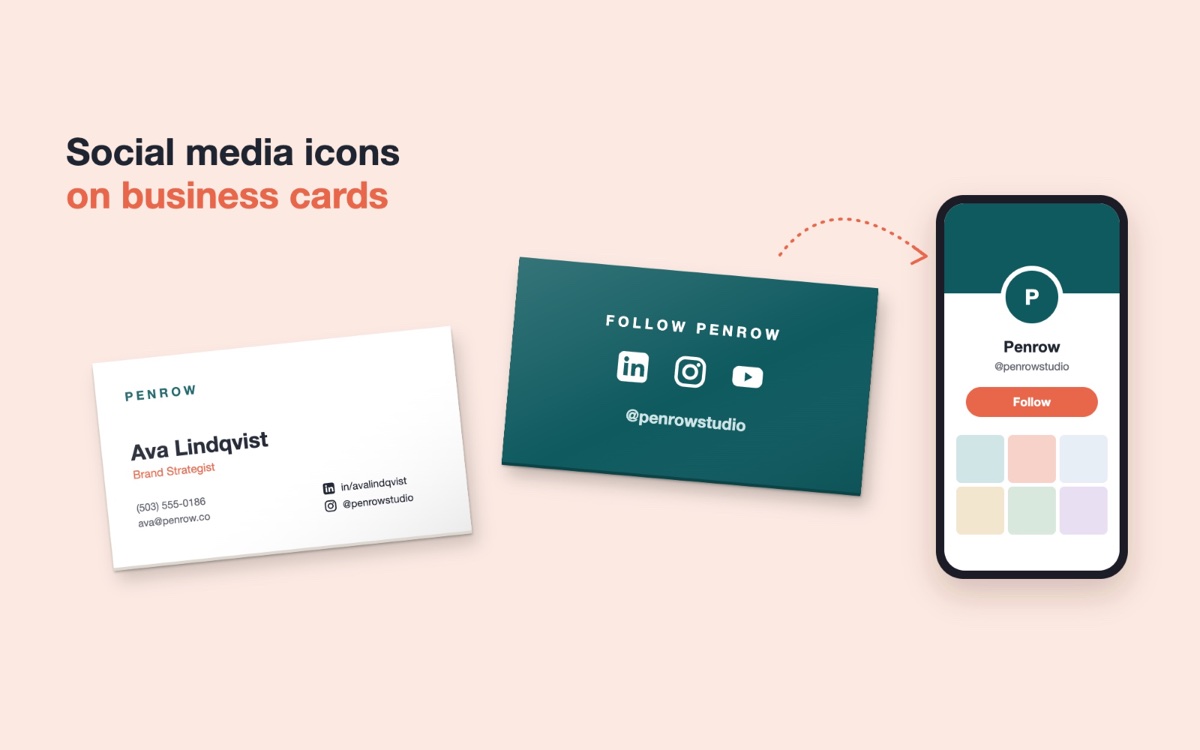
- Website and LinkedIn links nearly doubled, from 2.3% to 4.2%.
- Pronouns are still uncommon but growing, from 1.6% to 2.5%.
For what to include on your own card, see what to put on a business card. For job titles and how these details differ by industry, see business cards by industry.
Digital business cards are catching on
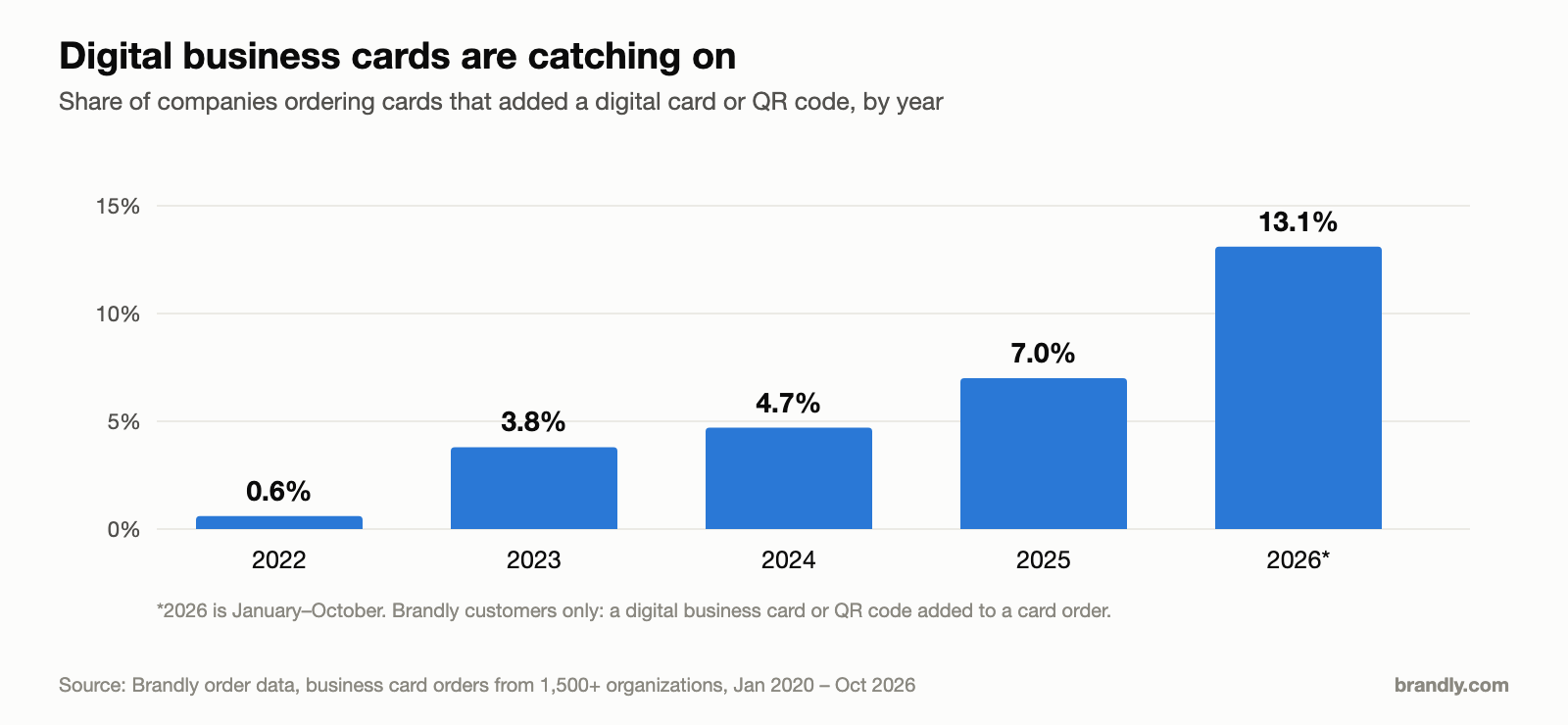
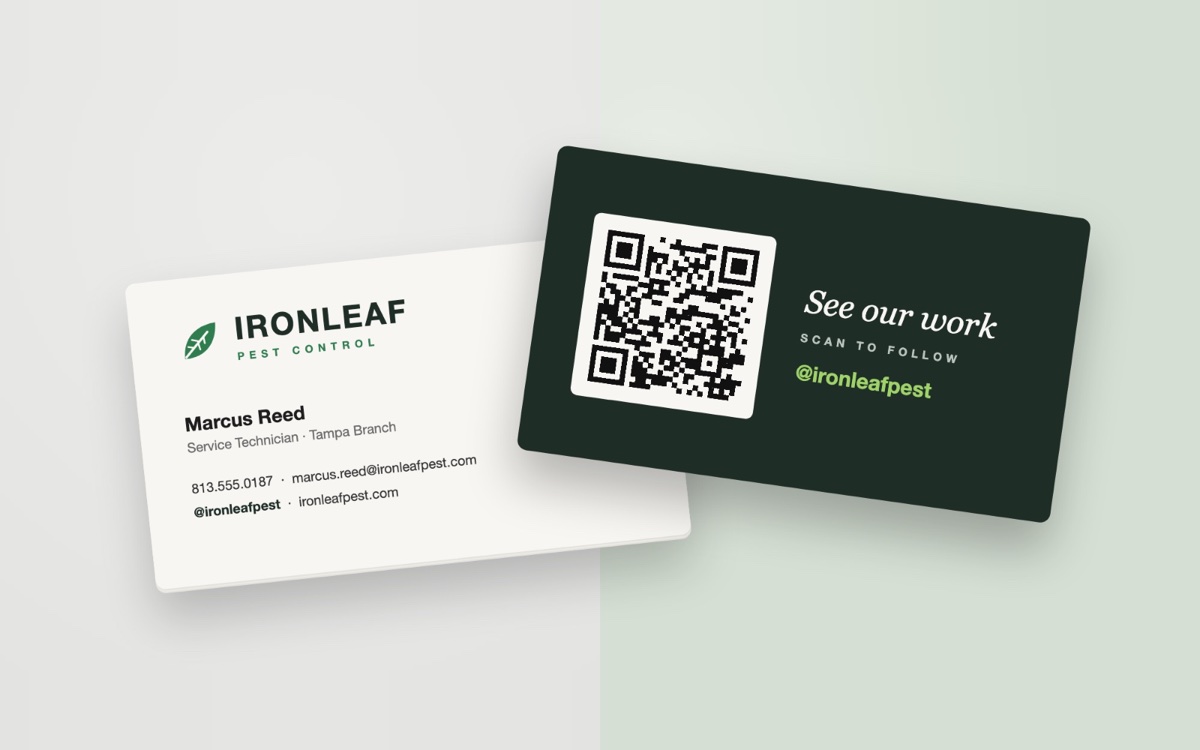
Paper isn’t being replaced; it’s being connected. Among Brandly customers, the share of companies that added a digital business card or a QR code to their printed cards grew from under 4% in 2023 to 13% in 2026. Someone scans the code on the card and saves the contact to their phone, so the card works on paper and on screen. This figure reflects Brandly’s own digital card feature, so it shows how quickly companies adopt the option once it’s available, not the whole market.
See QR code business cards that save your contact and how small a QR code can be. For whether digital cards are replacing paper, see are business cards still relevant?
- Premium Matte (29%) and Premium Bright White (28%) are the most popular papers.
- Premium or specialty paper rose from 69% to 80% of orders between 2020 and 2026.
- 100 cards is the most common order (56%), then 250 (28%).
- Rounded corners (10%) and vertical cards (6%) are niche choices.
- Fewer addresses and phone numbers; more credentials, links and pronouns.
- 13% of companies added a digital card or QR code in 2026.
Using these statistics
You’re welcome to quote these numbers and use the charts. Please credit Brandly and link to this page:
Source: Brandly, Business Card Trends: What 1,500+ Companies Actually Order (2026).
Business card trends FAQs
What is the most popular business card paper?
Premium Matte. In Brandly’s order data from more than 1,500 organizations, it makes up 29% of the average company’s business card orders, just ahead of Premium Bright White at 28%. Together, the two premium whites account for more than half of all orders.
How many business cards should I order?
For most people, 100. A box of 100 is 56% of the average company’s orders, and 250 is another 28%. Order 250 or more if you hand out cards every day, at trade shows or in sales.
Are rounded corners popular on business cards?
They’re a minority choice. About 10% of the average company’s card orders have rounded corners, down slightly from 13% in 2020, although a quarter of companies have ordered at least one rounded-corner card.
Are vertical business cards popular?
Not very. About 6% of the average company’s card orders are vertical, and the share has drifted down since 2020.
Are people still putting addresses and phone numbers on business cards?
Less than before. Between 2020-2022 and 2025-2026, the share of card orders with a street address fell from 30% to 23%, and the share with two or more phone numbers fell from 26% to 19%. Credentials, website or LinkedIn links and pronouns all became more common.
Can I use these statistics?
Yes. Please credit Brandly and link to this page, for example: “Source: Brandly, Business Card Trends: What 1,500+ Companies Actually Order (2026).”
The takeaway
Companies order fewer, better cards. They choose premium white paper, stick with a classic square, horizontal, two-sided layout, order 100 at a time and print less contact detail than they used to, while adding QR codes and digital cards. If your company’s cards still use standard paper and list an office address and three phone numbers, you’re behind the companies in this data. With Brandly, you can set your design and paper once, and every employee orders cards that match.